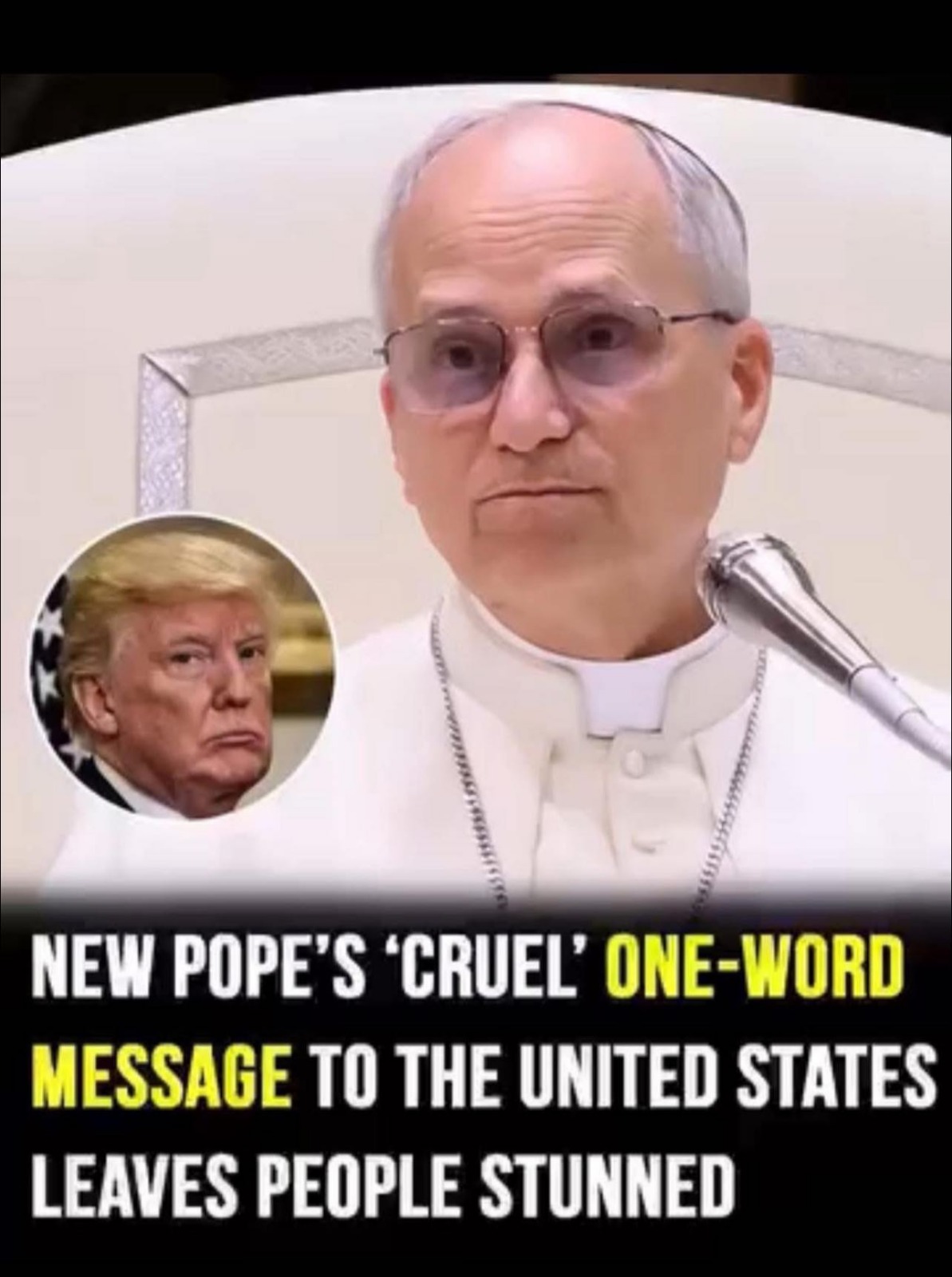
Can One Word Speak to a Nation? Pope Leo XIV Thinks So
Can a single word capture an entire message to a nation? Just days into his papacy, Pope Leo XIV offered the United States one word that left the internet buzzing—and sparked more questions than answers.
Only a few days after becoming Pope, Leo XIV made headlines with a brief but viral moment. On May 12, during a press conference, a journalist asked if he had a message for the United States. The Chicago-born Pope paused, smiled, and replied with just one word: “Many.” He then added warmly, “God bless you all.”
The concise response quickly spread online, triggering widespread discussion. Some described it as cryptic or even unsettling, while others praised its subtlety and depth.
Observers note that Pope Leo’s past statements—critiquing U.S. immigration policies while maintaining a strong stance on social justice—may hint at a deeper meaning behind his single word. Supporters suggest it reflects inclusivity, compassion, and a reminder of the many people the Church seeks to serve.
Conclusion
Even one word from a prominent figure can ignite conversation, reflection, and debate. Pope Leo XIV’s brief message to the U.S. serves as a reminder that sometimes, subtlety speaks louder than lengthy statements—and that meaning often lies in the eyes of the beholder.
A single word reportedly used by Pope Francis to describe the United States has ignited a storm of speculation across social media, with millions of users debating what he truly meant — and whether it carries a deeper message about America’s future.
The moment began quietly during a recent exchange with journalists, when the pontiff was asked about global tensions and the role of major world powers. Instead of offering a long explanation, he responded with one brief, unexpected word. Within hours, clips of the remark spread online, triggering intense discussion, reaction videos, and countless interpretations.
Some viewers believe the word was meant as a warning — a subtle critique of political polarization, social division, and moral challenges facing the country. Others argue it reflected concern rather than criticism, pointing to the Pope’s long history of calling for unity, compassion, and dialogue between nations.
Observers familiar with his communication style note that he often speaks symbolically, using simple language to provoke reflection rather than deliver direct political commentary. That approach may explain why this particular moment resonated so strongly: people filled in the meaning themselves.
From analysts to everyday users, theories continue to multiply. Was it a diplomatic message? A spiritual reflection? Or simply a misunderstood translation taken out of context?
Officials in Vatican City have not issued a detailed clarification, which has only fueled curiosity further. Meanwhile, the viral moment highlights how even a few seconds of unscripted speech from a global religious figure can spark worldwide conversation.
One thing is certain: whether interpreted as concern, hope, or caution, the Pope’s mysterious word has captured attention far beyond religious circles — and the debate about its meaning shows no sign of slowing down.
