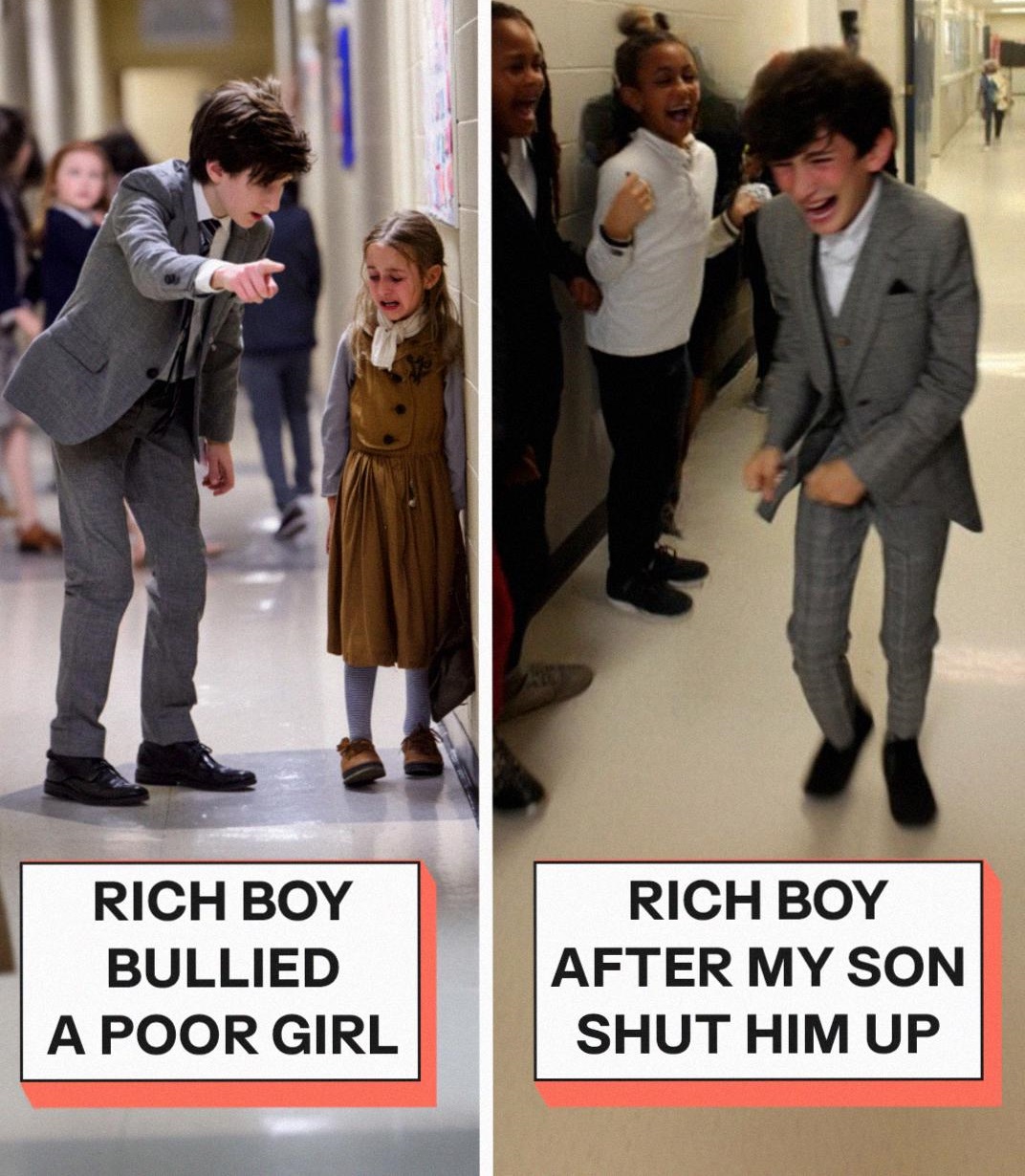
When my 10-year-old son came home and told me he’d defended a younger girl from the school bully, pride filled every corner of my heart. Then the bully’s father called, his voice sharp with threat, and I found myself trembling in my kitchen, utterly unprepared for what would unfold.
The afternoon light was slanting through the kitchen windows as I worked on dinner prep, a pile of potatoes waiting to be peeled. I heard Jason come through the front door, but something felt immediately off about the way he moved through the house.
Usually, he’d burst in with his typical energy, announcing his arrival, dropping his school bag with a thud, and grabbing whatever fruit caught his eye from the bowl on the counter. This time, though, there was only the slow scuff of his sneakers against the hardwood, followed by the creak of the couch as he collapsed onto it.
Being a single parent sharpens your instincts. You learn to read silences the way other people read words. Jason has always been a gentle kid, the type who’d rather spend recess sketching in his notebook than playing kickball. He’s the kind who gravitates toward classmates who seem lonely or left out. When something troubles him, he goes quiet in a particular way.
I dried my hands and joined him in the living room. He was hunched forward, elbows on his knees, staring at nothing in particular.
“Hey,” I said gently, sitting on the coffee table so I could see his face. “Want to talk about it?”
He looked up at me, and I could see the weight of something pressing on him.
“There’s this girl in second grade. Emily. Seven years old. She’s really quiet, keeps to herself mostly. Her mom works at Charlie’s Diner downtown, and I don’t think they have a lot of money.”
I nodded, letting him continue.
“Today during recess, Dylan cornered her by the swings,” he said, his hands tightening into fists. “He was laughing about her jacket, saying it looked like it came from a dumpster. Asked her if homeless people donated their clothes to her family.

“He grabbed her lunch bag, Mom. Held it up where she couldn’t reach it and made fun of her for bringing peanut butter and jelly. Said her mom must not care enough to pack her anything decent.”
My stomach twisted in anger. Dylan came from a wealthy family—one that owned several car dealerships. Kids like him sometimes treated cruelty as a birthright.
“What did you do?” I asked.
“I told him to give it back,” Jason said. “He laughed. Called me ‘comic boy.’ Asked what I was going to do about it. So I said at least Emily doesn’t need to buy friendship with expensive sneakers and video games.”
I couldn’t help a small smile. “How’d he take that?”
“Some of the kids laughed. Dylan got really red and threw the lunch bag at Emily and walked away. But Mom… I don’t think this is over. He’s not used to being called out. I think he’s going to come after me.”
I squeezed his hand. “You did the right thing. Whatever comes next, we’ll handle it.”
But inside, worry knotted in my chest.

The week passed quietly, and I almost believed Dylan had dropped the issue—until Friday.
Jason came home with a ripped sleeve and a bruise darkening his cheekbone. He tried to rush past me, but I caught his arm.
“Jason. Honey… what happened?”
“Dylan shoved me into the lockers. Called me ‘poverty defender’ and ‘trailer trash hero.’ Some kids said I shouldn’t have gotten involved. That I caused drama.”
I examined his bruise, fury simmering. But Jason didn’t need my anger—he needed my steadiness.
That evening, the vice principal called to arrange a meeting. I thought that was the end of it.
I was wrong.
Three days later, near 9 p.m., my phone rang. The unfamiliar number made me hesitate, but something told me to answer.
“Is this Jason’s mother?” a cold male voice asked.
“Yes… who’s calling?”
“Mr. Campbell. Dylan’s father.”
My breath caught.
“Your son humiliated mine in front of the entire school. I need you in my office tomorrow at 9 a.m. to discuss how you’re going to make this right. If you don’t come, there will be consequences.”
“Mr. Campbell, my son was defending a younger girl—”
“Nine a.m. Don’t be late.”
He hung up.
I stood frozen, heart pounding.
His office building was glass and steel—intimidating from the moment I stepped inside. The receptionist eyed me with disdain before escorting me to a massive corner office.
“Sit,” Mr. Campbell ordered.
I did.
“Your son embarrassed mine,” he began. “Dylan came home upset, and I don’t appreciate having to deal with school drama because you haven’t taught your child proper boundaries.”
Anger flared. “My son defended a seven-year-old girl from cruelty.”
“I’m not finished,” he snapped.
Then his expression changed—softened, unexpectedly.

“Dylan told me everything,” he said quietly. “What he did. What your son said. How the kids laughed at him.”
He rubbed his face, suddenly looking exhausted.
“And I realized… I raised a bully.”
The admission shocked me.
“I gave him everything money can buy,” he continued. “But never taught him empathy. Never showed him that people matter, regardless of what’s in their wallet. Your son did what I failed to do.”
He opened a drawer and slid a check toward me—an enormous amount.
“For Jason. For his education. For anything.”
“I can’t take this,” I said, pushing it back. “Jason didn’t do it for a reward.”
“I know. That’s why he deserves it.”
When I came home, Jason looked up anxiously from his sketchbook.
“How bad was it?”
“Not bad at all,” I smiled. “Mr. Campbell wanted to thank you.”
“For what?”

“For teaching his son about kindness.”
Jason blinked. “Does that mean Dylan’s not going to be a jerk anymore?”
“Maybe not overnight. But his dad is going to make sure he changes.”
He nodded thoughtfully. “I didn’t do it to change him. I just didn’t want Emily to feel bad.”
“That’s why you’re extraordinary.”
In the following weeks, small changes rippled through the school.
Dylan apologized to Jason one morning—awkward but sincere. Emily arrived with a proper winter coat and a new backpack. Her mother received a job offer at one of Mr. Campbell’s dealerships, full-time with benefits.
No headlines. No fanfare. Just quiet repair work.
One night, Jason asked, “Do you think people can really change?”
“Yes,” I said. “If they want to—and if someone shows them why they should.”
He smiled. “I want to put Emily in my next comic. She can be a secret agent.”
“Only if she gets to be the hero.”
“Deal.”
Sometimes the biggest changes begin with a small act of courage from a kid who simply refused to let someone else be hurt.
And sometimes the wealthy and powerful need a reminder that humanity—not money—is what defines true strength.
