When Hazel falls for a man who calls himself godly, she’s prepared to follow his rules in the name of love. But the deeper she bends, the more she begins to break, until one devastating moment shatters everything.
I was 25 when I thought I’d finally found someone good.
His name was Elias. He was 27, calm, handsome, and carried himself with quiet certainty — the kind of presence that made people lean in a little closer and listen a little longer.

We met at a small Bible study group hosted in a friend’s apartment. He stood out immediately. He was always quoting scripture and steering the room back to God. He always seemed too sure of everything.
For the first time in years, I let myself picture a future with someone. A life built on faith, shared values, and peace. It all felt safe and solid, like maybe this time I wouldn’t be left bruised or disappointed.
Elias made it seem like he was above impulse or ego, like he answered to something higher.
Looking back, I can see how I ignored the unease. The way his praise always came with conditions. The way he talked about other women — too loud, too flashy, too much.
“You don’t want to be the kind of woman men stare at, Hazel,” he said one day after a service. “You want to be the one they respect.”
At the time, I thought it was wisdom. Maybe even love.
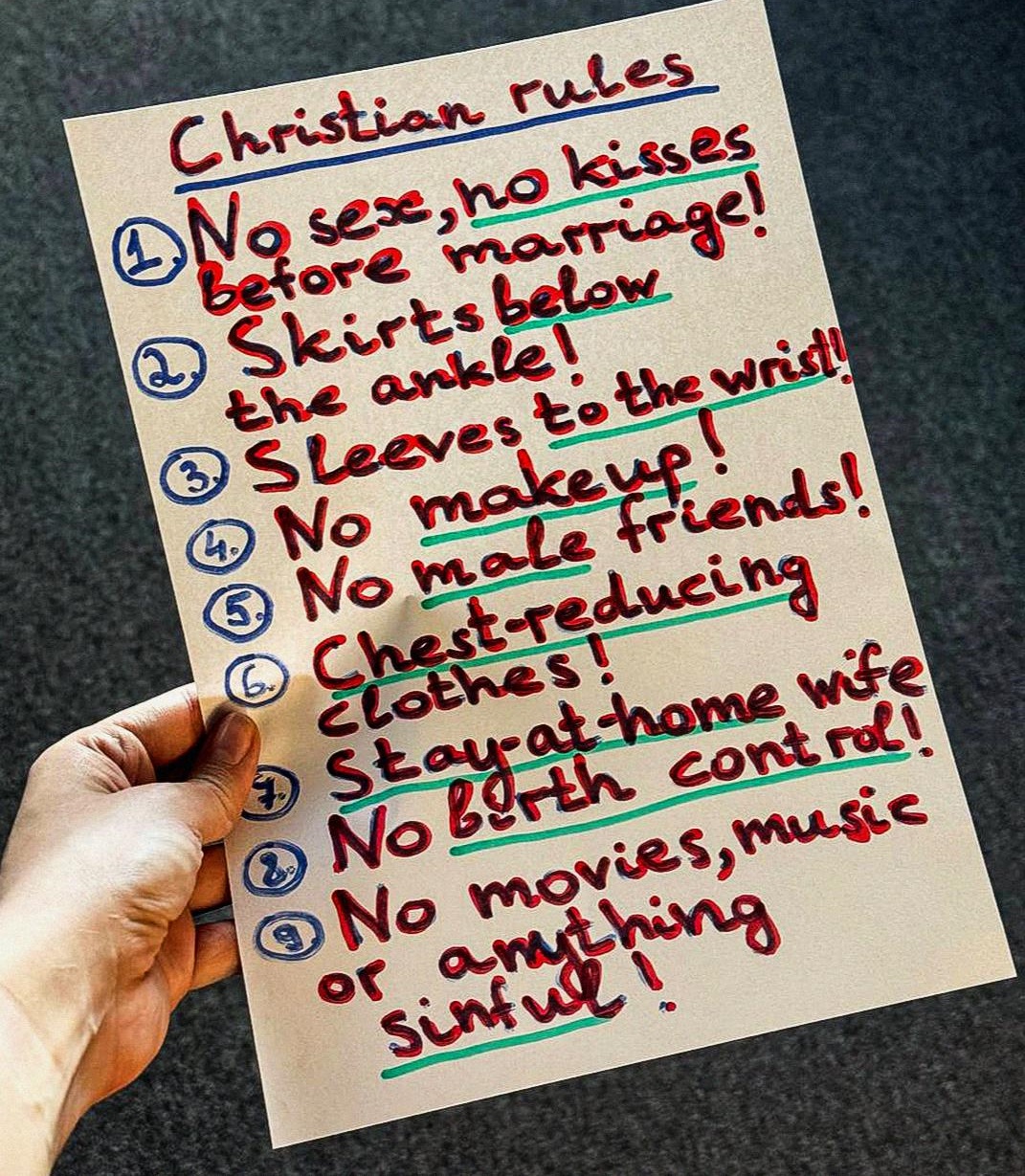
It wasn’t long before Elias sat me down and explained what he called the “guardrails of a holy courtship.” He never used the word rules, but that’s exactly what they were — expectations that left little room for me to be anything but small.
He spoke carefully, as if offering a gift.

“Hazel,” he said, “I need you to take this conversation seriously.”
I nodded, eager to believe this was about building a life together.
“There will be no physical contact before marriage,” he said. “Not even kissing. That kind of intimacy is reserved for your husband.”
“Not even a kiss?” I asked.
He smiled calmly. “It’s for your own good. Kissing leads to temptation. This is about protecting you and honoring God.”
Something in me hesitated, but I stayed quiet.
Then came the rest.
“Your skirts should fall below the ankle. Sleeves down to the wrist. Modesty is a gift to the men around you. It shows respect for their struggle.”
For a moment, he felt like a stranger.
“No tight clothing. No form-fitting outfits. Makeup should be minimal. A woman’s beauty shouldn’t distract from her character.”
I nodded, my thoughts racing. I told myself this was devotion. Discipline. Faith.
“No close friendships with men,” he continued. “Emotional connections outside marriage are dangerous.”
Then: “No worldly media. No movies, music, or social platforms until the Church deems it fit.”

When I tried to speak, he gently stopped me.
“I’m protecting our future, Hazel.”
He went on.
“When we’re married, I expect you to stay home. I’ll provide. Your calling will be raising our children and caring for our home.”
I mentioned my job, how much I loved it.
“The world teaches women to chase independence instead of peace,” he said softly. “You’ll see. This is better.”
“And lastly,” he added, “we’ll pray together every morning and night. That’s how a godly couple stays connected.”
Despite the ache in my chest, I said yes.
I followed everything he asked.
I boxed up my jeans and makeup. Deleted my music. Packed away books I loved. I stopped watching shows that once comforted me.
I declined brunches, skipped birthdays, and pulled away from friends who didn’t “live by the Word.”

When Elias spoke of obedience, I thought he meant faith. When he said submission was love, I tried to believe him.
Every morning I dressed plainly, prayed with him on speakerphone twice a day, even when I was exhausted and felt like God had stopped listening.
Two weeks into our engagement, we played a Bible trivia game with friends. Elias mispronounced “Nebuchadnezzar” so badly I burst out laughing.
Later, in the car, his voice turned cold.
“That wasn’t appropriate,” he said. “Women shouldn’t draw attention to themselves.”
I stared out the window, scolding myself. This is love, I told myself. This is discipline.
Two months passed. We still hadn’t kissed.
When I asked, he shook his head. “We’re not like other couples. That’s what makes us sacred.”
Slowly, things started to feel wrong. His phone buzzed constantly. He stepped away to take calls. I saw him closing apps when I walked in.
“It’s ministry stuff,” he said.
I wanted to believe him.

Then one Friday night, everything broke.
I was walking home from a quiet book club meeting when I passed the community center where Elias volunteered. The lights were on.
And there he was.
Kissing another woman.
Not a quick mistake. It was intimate. Familiar. One hand on her waist, the other cupping her cheek. She laughed softly like this wasn’t new.
My fiancé — the man who told me a kiss would dishonor God — was kissing another woman on church property.
The woman worked at a coffee shop near my office. Elias had once called her “too flirtatious” and told me to avoid her.
I turned and walked away.
The next morning, I called him.
“I saw you,” I said. “Kissing her.”
“That’s not what it looked like,” he said too quickly.
“You wouldn’t even let me kiss you,” I said. “And now this?”

“I was lonely,” he sighed. “You’ve been distant.”
“I gave up everything for you,” I said. “My friends. My job. My voice. And now you’re blaming me?”
“You’re twisting this,” he muttered. “You’re making it ugly.”
“No,” I said. “I’m finally seeing it clearly. You’re not holy. You’re a fraud.”
“I made a mistake,” he said. “I’m only human.”
I ended the call.
I didn’t report him to the church. I didn’t need to. Someone else came forward. An investigation followed. Elias was asked to step down.
Then his mother came to my door, begging me not to cancel the engagement.
“I’m not giving up,” I told her. “I’m choosing myself.”
That night, I returned the ring.
For a while, I grieved the version of myself I’d buried to fit his mold. I cried for the girl who believed shrinking herself would bring her closer to God.
But slowly, it got easier.

I played music again. I laughed loudly. I trusted my own voice.
One afternoon, I ran into Elias at the grocery store.
“I hope you can forgive me,” he said. “That’s what the Lord would want.”
“God may want forgiveness,” I said. “But He also wants truth. You never gave me that.”
I walked away.
Now I’m seeing someone new. A man who prays with me because we want to, not because it’s demanded. A man who loves me because I’m alive, not obedient.
I can laugh. I can wear what I love. I can be myself.
He doesn’t measure my worth in silence or sacrifice.
He just sees me.
That night, I cooked dinner, poured a glass of wine, and thanked God for giving me back to myself.
