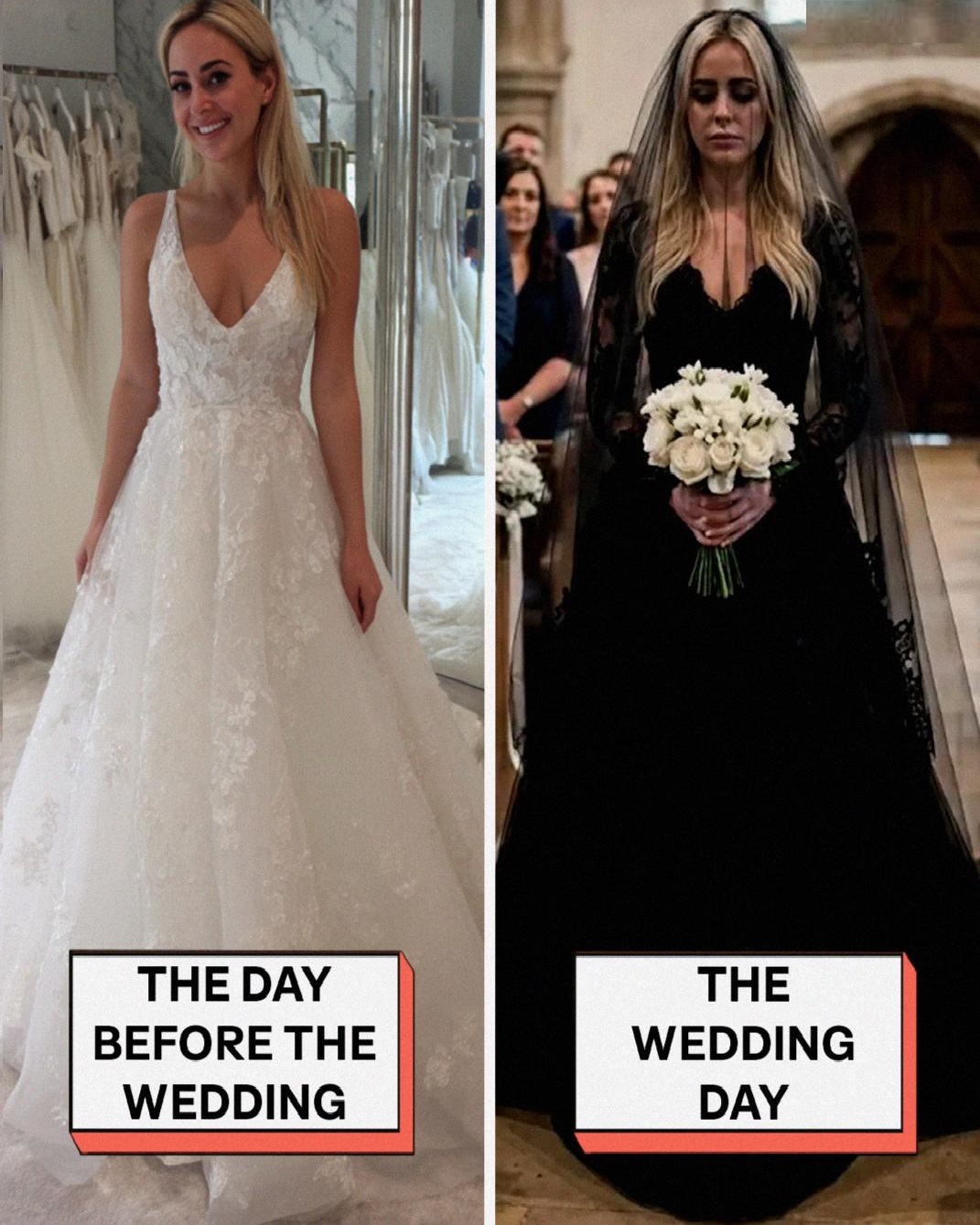
I thought I knew every detail of my daughter’s dream wedding until she walked down the aisle in a black dress. What happened next turned a picture-perfect day into something none of us saw coming.
My name is Linda; I’m 55 years old, and last weekend, my daughter, Jane, 33, walked down the aisle in a black wedding dress. But that wasn’t even the biggest surprise of the day; that was just the beginning.

My Jane has always been a dreamer. When she was little, she used to wrap herself in bedsheets and old curtains and parade around the living room. She’d say, “Mom, one day, I’ll wear the most beautiful wedding dress in the world at the prettiest wedding!”
I would laugh and say, “You’d better let me come to that one.”
Jane met Dylan in college. He was quiet, polite, and had a way of making people feel seen. He remembered small details, asked thoughtful questions, and listened when people spoke. They started dating sophomore year, and six years later he proposed under twinkle lights at our cabin on Christmas Eve. Everyone thought they were the perfect couple.
Jane called me that night, crying and laughing at the same time. “I’m getting married, Mom!” she shouted. I cried too.
We spent nearly a year planning the wedding. Every Saturday, Jane came over with mood boards and color palettes. We sorted swatches, tasted cake samples, and obsessed over details. She wanted timeless, warm, and elegant. More than anything, she wanted the dress to feel like her.

She worked with Helen, our town’s best seamstress and a longtime family friend. Fittings became our mother-daughter ritual. The final gown was a soft ivory dress with delicate lace sleeves and a sweeping train. Jane smiled at her reflection and whispered, “It’s perfect, Mom.”
On the wedding day, the house buzzed with energy. Makeup artists rushed around, hairstylists pinned curls into place, photographers captured every moment. Jane sat by the window in a white silk robe, glowing.
My younger daughter Chloe volunteered to pick up the gown after Helen steamed it overnight. An hour before the ceremony, Chloe arrived holding the garment box. I opened it eagerly—then froze.
Inside was a completely black dress.
I thought it had to be a mistake. Chloe calmly told me it wasn’t. Jane had asked for the change and hadn’t told me because she knew I’d try to stop her. “Trust us,” Chloe said.
I walked to the garden in a daze. The venue was perfect, the guests smiling, Dylan standing at the altar looking tense. I tried to convince myself the dress was symbolic, something bold and meaningful.
Then the music changed.
Jane stepped into view, wearing black.
The crowd gasped. The dress didn’t overshadow her—it crowned her. She wore no veil and carried no bouquet. When she reached the altar, she stopped the officiant and took the microphone.
Before the ceremony could begin, she asked Lily—one of her bridesmaids—to come forward.
Jane spoke calmly. She explained that Lily, someone she trusted as a friend, had been sleeping with her fiancé for six months. Gasps rippled through the crowd. Dylan’s face drained of color.
Jane revealed proof. Screenshots appeared—messages, photos, hotel receipts, flights. The silence was unbearable.
“I didn’t come here to marry a liar,” Jane said. “I came to bury the illusion I believed in.”
Turning to Lily, she said quietly, “You can keep the bouquet. You’ve been holding everything else that was mine.”
Then Jane turned and walked back down the aisle alone.
I sat frozen, torn between heartbreak and pride. Jane had reclaimed her power in front of everyone.
Later, I found her in the bridal suite, still wearing the black dress. She broke down in my arms. She told me how she’d discovered the affair—late nights, excuses, a forgotten login on a laptop.
“I didn’t want to wear white for a lie,” she said. “I wore black to bury it. It was a funeral for the future I thought I was walking into.”
I told her she was brave.

That night, she came home with me. Over time, she healed slowly. She painted again, found a new job, and learned to smile without forcing it.
Dylan tried to reach out, but she blocked him. Months later, we heard his company collapsed after misused funds were discovered. Lily disappeared and moved away.
“Karma doesn’t need an audience,” Jane said.
About a year later, Jane met someone new—kind, quiet, attentive. She took things slowly, and peace returned to her face.
I realized then that the day she wore black wasn’t the end of her story. It was the beginning.
When people ask what happened, I say:
“My daughter wore black to her wedding, and thank God she did. She didn’t lose her future. She took it back.”
