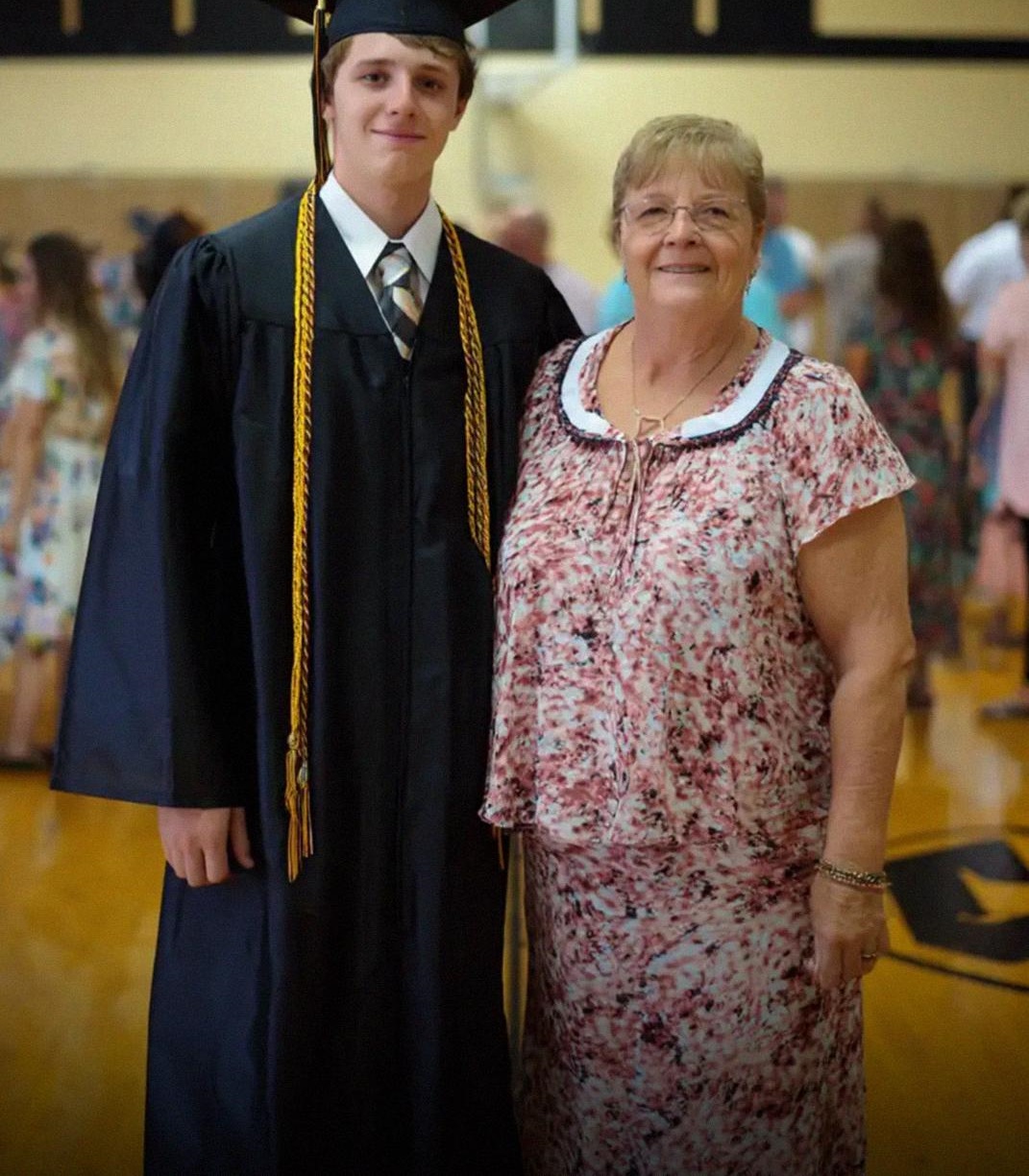
My classmates made fun of me because I’m the son of a garbage collector—but at graduation, I only said one sentence, and the whole gym went dead silent and started crying.
I’m Liam (18M), and my life has always smelled like diesel, bleach, and old food rotting in plastic bags.
My mom didn’t grow up wanting to grab trash cans at 4 a.m. She wanted to be a nurse. She was in nursing school, married, with a little apartment and a husband who worked construction.
Then one day, his harness failed.
The fall killed him before the ambulance even got there. After that, we were constantly battling hospital bills, funeral costs, and everything she owed for school.
Overnight, she went from future nurse to widow with no degree and a kid.
Nobody was lining up to hire her.
The city sanitation department didn’t care about degrees or résumé gaps. They cared if you showed up before sunrise and kept showing up.
So she put on a reflective vest, climbed onto the back of a truck, and became “the trash lady.” Which made me “trash lady’s kid.”
That name stuck.
In elementary school, kids would wrinkle their noses when I sat down.
“You smell like the garbage truck.”
“Careful, he bites.”
By middle school, it was routine. If I walked by, people would pinch their noses. In group work, I was the last pick.
I learned every hallway because I was always looking for places to eat alone.
My favorite spot ended up being behind the vending machines by the old auditorium. Quiet. Dusty. Safe.
At home, though, I was different.
“How was school, mi amor?” Mom would ask, peeling off rubber gloves, fingers red and swollen.
“It was good,” I’d say. “Sat with friends. Teacher says I’m doing great.”
She’d light up. “Of course. You’re the smartest boy in the world.”
I never told her that some days I didn’t say ten words at school. That I ate lunch alone. That when her truck came down our street, I pretended not to see her wave.
She already carried my dad’s death, the debt, the double shifts. I wasn’t adding my misery to that.
So I made myself a promise: if she was going to break her body for me, I was going to make it worth it.
Education became my escape plan.
We didn’t have money for tutors or prep classes. I had a library card, a beat-up laptop she bought with recycled can money, and stubbornness.
I stayed in the library until closing. Algebra, physics, anything I could get my hands on.
At night, she sorted cans on the kitchen floor while I did homework at the table.
“You understand all that?” she’d ask.
“Mostly.”
“You’re going further than me,” she’d say, like it was a fact.
High school came, and the jokes got quieter but sharper.
No one yelled “trash boy” anymore. Instead, chairs slid away. Fake gagging sounds followed me. People sent snaps of the garbage truck and laughed.
I could’ve told a counselor. But then they’d call home. And Mom would know.
So I swallowed it and focused on grades.
That’s when Mr. Anderson entered my life. My 11th-grade math teacher—messy hair, loose tie, coffee always in hand.
One day he noticed I was doing extra problems.
“These aren’t from the book.”
“I just… like this stuff.”
“Numbers don’t care who your mom works for,” he said. “Ever thought about engineering?”
I laughed. “Those schools are for rich kids.”
“Fee waivers exist,” he said. “So do smart poor kids. You’re one of them.”
From then on, he became my unofficial coach. Extra problems. Lunch in his classroom. Conversations about algorithms like gossip.
“Your zip code is not a prison,” he told me.
By senior year, I had the highest GPA. People called me “the smart kid.” Some with respect. Some like it was an illness.
One day, Mr. Anderson dropped a brochure on my desk—one of the top engineering institutes in the country.
“I want you to apply.”
“I can’t leave my mom.”
“I’m not saying it’ll be easy. I’m saying you deserve the choice.”
So we did it in secret.
My first essay was generic garbage. He shook his head.
“Where are you in this?”
I rewrote it. About 4 a.m. alarms. Orange vests. My dad’s empty boots. My mom studying medicine once and hauling waste now. About lying when she asked if I had friends.
When he finished reading, he just said, “Send that.”
The acceptance email came on a Tuesday morning.
Full ride. Grants. Housing. Everything.
I printed the letter and waited for Mom to get out of the shower.
“All I’ll say is—it’s good news.”
She read it slowly.
“Is this real?”
“It’s real.”
She hugged me so hard my spine popped. “I told your father you’d do this.”
We celebrated with a five-dollar cake and a plastic banner.
I saved the full reveal for graduation.
The gym was packed. I saw Mom in the back bleachers, sitting straight, phone ready.
“Our valedictorian, Liam.”
The applause was polite. Surprised.
I stepped to the mic.
“My mom has been picking up your trash for years.”
The room went still.
“A lot of you know me as ‘trash lady’s kid.’ What you don’t know is that my mom was a nursing student before my dad died. She dropped out so I could eat.”
I listed the jokes. The nose pinching. The chairs sliding away.
“There’s one person I never told,” I said. “My mom. Because I didn’t want her to think she failed me.”
She covered her face.
“I’m telling the truth now because she deserves it. And because I didn’t do this alone.”
I thanked Mr. Anderson.
Then I looked at Mom.
“You thought picking up trash made you less. But everything I am is built on you getting up at 3:30 a.m.”
I pulled out the letter.
“In the fall, I’m attending one of the top engineering institutes in the country. On a full scholarship.”
The gym exploded.
My mom screamed and cried.
“I’m not saying this to flex,” I said. “I’m saying it for anyone embarrassed by their parents’ work. Don’t be. Respect the people who clean up after you.”
“Mom,” I finished, “this one’s for you.”
The standing ovation followed me back to my seat.
Afterward, she hugged me and whispered, “Next time, let me protect you too.”
That night, we sat at our kitchen table. Diploma and acceptance letter between us.
I could still smell bleach and trash on her uniform by the door.
For the first time, it didn’t make me feel small.
I’m still “trash lady’s kid.”
But now it sounds like a title I earned the hard way.
This story is a work of fiction inspired by real events.
