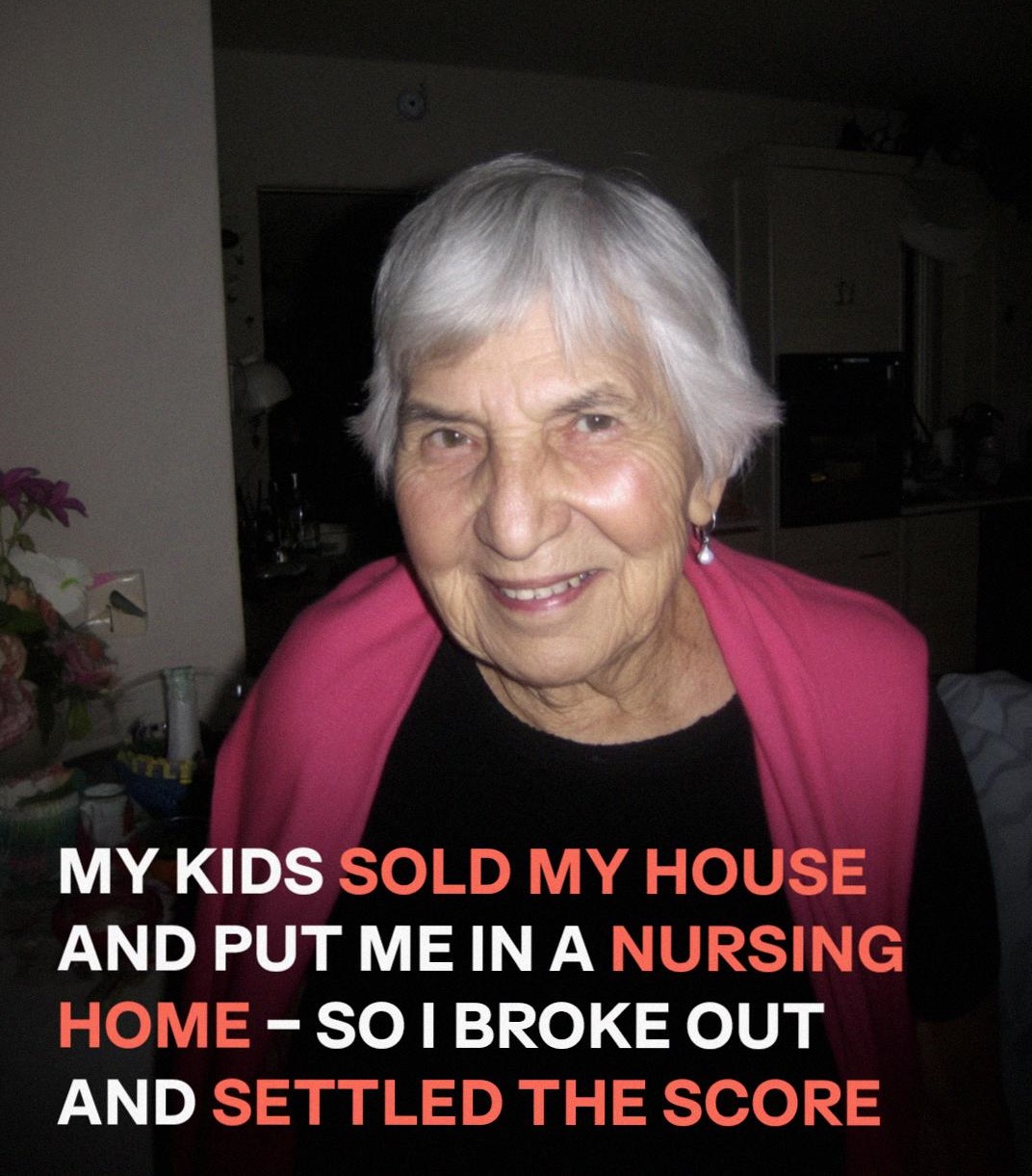
I walked out the back door of the nursing home with nothing but bus fare and a handbag. My children said I was confused, but they just didn’t like what I did with my land. So they locked me away, sold my house, and cleared out the women I was helping. That’s when I started planning payback.
I tried escaping from the nursing home the easy way first — through the front door. I was just reaching for the handle when a voice called out behind me.
“Ma’am, you’re not allowed to leave without an escort.”
The young woman at the front desk said it gently, the way you’d speak to a child. She had kind eyes. I almost felt bad about what I was going to do.
“Oh, of course, dear. Thank you for reminding me.”
I smiled, retraced my steps, turned the corner, pushed through the back door, and walked straight out into the world that had been stolen from me.
I glanced back once to make sure no one was chasing me yet, then kept walking.
I caught the city bus three blocks down — the one that runs to the outskirts of town — and watched the familiar streets roll by as I thought back to the family lunch two weeks earlier, when everything changed.
It was a perfect afternoon. I remember sitting on the porch with my children, feeling grateful for all the years we’d had together.
That’s when I told them I’d updated my will.
“I’ve made Lauren my medical power of attorney,” I said. “Just in case anything happens. My house and the cottages I built will go into a trust after I pass. I want my little housing project for women who need a fresh start to continue after I’m gone.”

The table went quiet — not the comfortable kind.
Brian cleared his throat. “You mean strangers get the land, not your own family?”
“They’re not strangers,” I said. “They’re women from this community who needed a place to start over. You can’t imagine what they’ve been through.”
Lauren said nothing, but her lips tightened.
One week later, Lauren insisted on taking me for a routine checkup. The doctor asked if I’d been forgetting things, losing track of time, or feeling disoriented.
Before I could answer, Lauren jumped in.
“She called me twice last month for our Sunday chat,” she said. “The second time, she didn’t even remember the first.”
I stared at her. “That’s not true.”
Lauren gave the doctor a soft, pitying look.
The questions kept coming. I answered honestly. Yes, I forgot things sometimes. Yes, I felt anxious. No, I didn’t always eat properly.
Next thing I knew, I was admitted to a nursing home for observation.
My phone disappeared. My mail stopped coming. When I asked questions, I got vague answers and patronizing smiles.
Realizing Lauren had tricked me broke my heart. But once I accepted it, I started planning.
I pretended to be the confused old woman they needed me to be — and then I walked out the back door.
The bus dropped me three blocks from my property. I walked the rest of the way, believing I’d get my own doctor, clear up the nonsense, and go home.
That illusion shattered when I saw the red “SOLD” sign planted in my lawn.
They hadn’t just locked me away. They’d sold my house.
I rushed inside. The rooms were empty. No furniture. No photos. No rug my mother had owned and I’d stubbornly refused to replace.
I cried as I walked through the rooms that had held my entire adult life.
Then I looked out back.
The five small cottages I’d built for homeless women stood dark.
Anger burned hotter than grief.
Then a light flicked on.
Carmen was still there.
I crossed the yard and knocked. She opened the door and hugged me like she was afraid I’d vanish again.

“Your kids came like wrecking balls,” she said. “They said you had dementia and had power of attorney. They told us to leave.”
She handed me a crumpled notice: Demolition inspection scheduled.
“The power of attorney I gave Lauren was medical only,” I said slowly. “She can’t sell my home unless…”
The truth hit me like ice water.
They’d used the doctor’s report to file for emergency conservatorship.
They’d chosen money over people.
I sank into a chair, wondering where I’d gone wrong as a mother.
“What do we do now?” Carmen asked.
I looked at the SOLD sign in the distance.
“We take it all back.”
The next morning, I called my lawyer, Harold. He’d handled my affairs for 20 years.
Two hours later, he called back.
“The conservatorship was filed on shaky mental health claims,” he said. “But the title transfer hasn’t gone through. Escrow flagged inconsistencies.”
Harold filed an emergency motion to freeze the sale and challenge the conservatorship.
That evening, I heard tires crunch on gravel.
Lauren and Brian stepped out of an SUV, calling my name.
“If we get her to sign full power of attorney, this all goes away,” Brian said. “The buyer’s still waiting.”
Lauren sighed. “We had to intervene. She wouldn’t listen.”
I stepped outside.
“What you did was evil,” I said. “And you are not the people I raised.”
Their faces drained of color.
“You tricked me, locked me away, stole my home, and tried to sell it without consent,” I continued. “My lawyer has everything. And we recorded what you just said.”
Carmen stepped forward, phone raised.
Sirens wailed in the distance.
“I called the police on thieves,” I said. “The fact they’re my children only makes it hurt more.”
Weeks later, a judge ruled the conservatorship invalid and voided the sale.
Lauren and Brian were investigated for elder exploitation.
I didn’t feel triumphant. Just tired.
The SOLD sign was gone. The trust paperwork moved forward. The cottages reopened.
Some of the women came back. One brought another woman from the shelter.
I might have lost my children.
But I protected my home, my purpose, and the people who needed it.
And that was worth everything.
