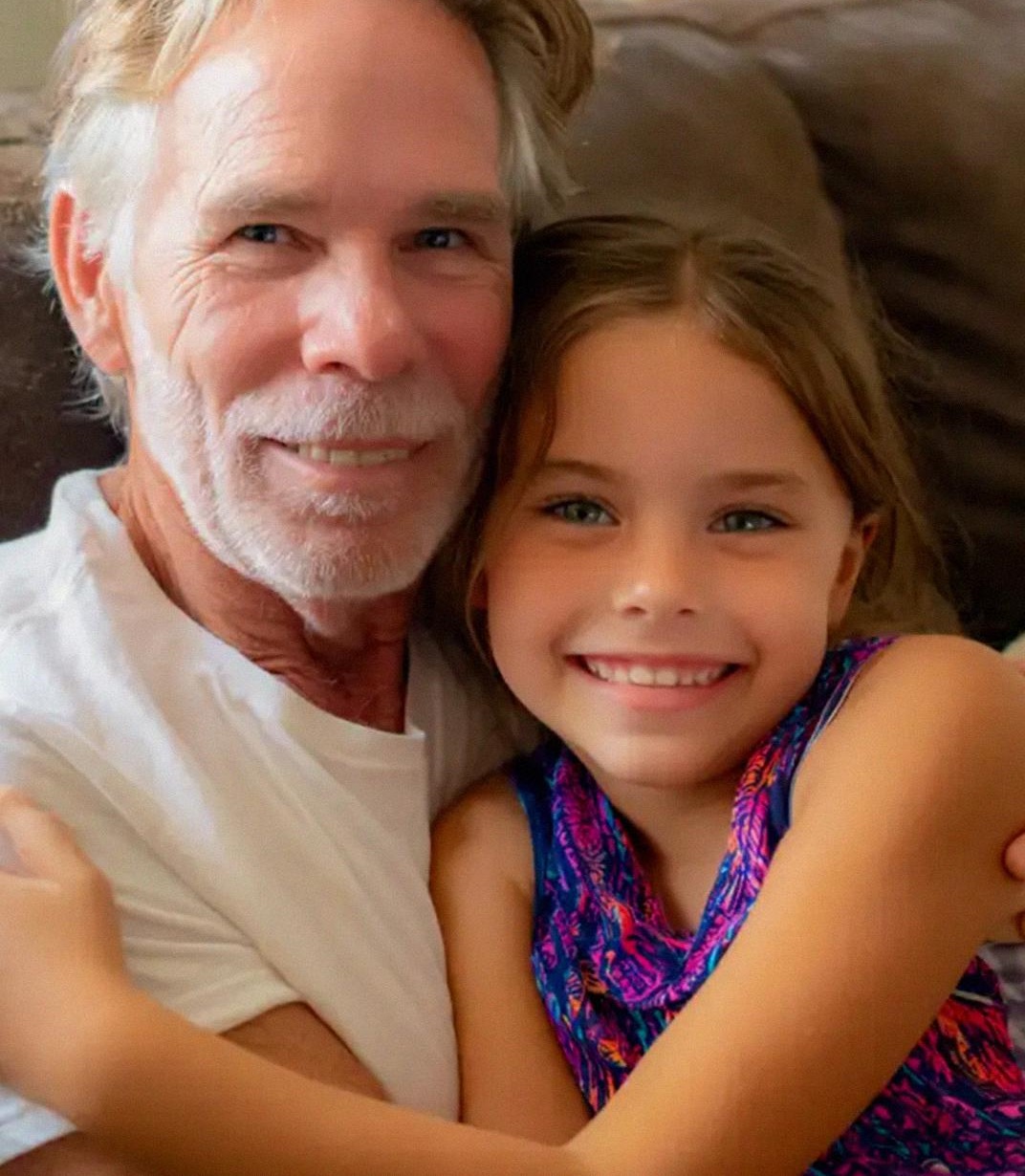
My granddaughter Lily used to run into Grandpa Jim’s arms the second she walked through our door. So when she came to stay with us for a week and suddenly refused to hug him goodnight, I thought she was just tired—until she looked up at me in bed and whispered, “Grandma… he’s different.”
Lily had always loved my husband like he hung the moon.
The second she walked through our door, she went straight to Grandpa Jim, wrapping her arms around his waist and announcing, “I’m here,” like she was reporting for duty.
She called him her “favorite person.”
He taught her to ride a bike, shuffle cards, whistle through her fingers. He let her wear his old baseball cap around the house like a crown.
Last month, my daughter Erin called early one morning.
“Mom… can Lily stay with you for a week?”
“Of course.”
“It’s complicated,” she added quietly.
For the first three days, everything felt normal.
Lily ran up the driveway shouting, “GRANDPA!” and threw herself into Jim’s arms. Pancakes, board games, laughter—it was all the same.
Then, on the fourth day, something shifted.
Lily got quiet.
She followed Jim around but spoke less. At dinner, she barely answered him. When he asked if she wanted to play cards, she said, “Maybe later.”
That night, as always, Jim waited for his goodnight hug.
“Go hug Grandpa,” I said.
Lily stopped… looked at him… and shook her head.
“I’m sleepy.”
Jim forced a smile. “Okay. Sleep tight.”
Later, as I tucked her in, she stared at the ceiling.
“Grandma… he’s different.”
My chest tightened. “Different how?”
She hesitated. “He was crying.”
I blinked. “Grandpa was crying?”
She nodded.
“I got up for water. I heard noises… like someone trying not to be loud. I peeked. He was at the table… shaking. He looked… small.”
I took her hand. “You did the right thing telling me.”
“Is he mad at me?” she asked.
“No.”
“Did I make him cry?”
“No. Sometimes grown-ups cry too.”
But her voice trembled. “He’s different.”
That night, I couldn’t sleep.
The next morning, I watched Jim more closely. He seemed distracted. He forgot small things. He paused mid-task, like his mind had slipped.
Later, I found him in the den, quickly shoving papers into a drawer.
That night, I sat across from him.
“We need to talk.”
“About what?”
“Lily saw you crying.”
He froze. “She shouldn’t have been up.”
“A moment doesn’t make a child afraid of you. What’s going on?”
“Nothing.”
“Jim.”
“Drop it,” he snapped.
I went still.
After he fell asleep, I did something I hated—I opened the drawer.
Inside were medical papers.
Neurology. Cognitive assessment. Follow-up.
My hands trembled.
“You went through my things.”
I turned. Jim stood in the doorway.
“I had to,” I said. “You wouldn’t tell me.”
He looked angry… then tired.
“They said it’s early,” he whispered.
“Early what?”
He stared at the floor.
“Early dementia. Alzheimer’s is possible.”
The room tilted.
“I’ve been forgetting things,” he said. “Names. Why I walk into a room… It’s slipping, and I can’t stop it.”
“Why didn’t you tell me?”
“Because I don’t want to be a burden.”
“You’re my husband. Not a burden.”
“And Lily… she looks at me like I’m the safest place. I didn’t want that to change.”
My throat burned. “So you cried alone.”
He nodded.
“We can’t hide this,” I said.
The next day, we told Erin and her husband.
There were tears, but also a plan—appointments, support, no more secrets.
That evening, I sat with Lily.
“Grandpa is going through something hard,” I said gently. “Sometimes his brain gets mixed up, and it makes him sad.”
She looked at me. “Is he still Grandpa?”
“Yes. He just might need more help.”
“Did I do something?”
“No. Never.”
“Can I see him?”
We walked into the living room.
Jim looked up, nervous.
“Hi, kiddo.”
Lily stood there, then said, “Grandpa, you were crying.”
“I was,” he admitted. “I’m sorry you saw that.”
“Are you mad?”
“Never.”
She stepped closer. “You’re still my favorite.”
Jim broke down and knelt.
“I’m lucky, then.”
She hugged him tight.
Then she said, very seriously, “No more secrets.”
Jim glanced at me. “No more secrets,” he promised.
That night, Jim and I sat quietly.
“I thought if I ignored it, it would stay small,” he said.
“We face it,” I told him.
“Are you scared?” he asked.
“Yes. But I’m more scared of you doing it alone.”
He nodded. “Then I won’t.”
Two days later, Lily went home.
She hugged Jim before leaving—steady, sure.
When the house grew quiet, I went out for a while, trying to gather myself.
When I returned, Jim was in the kitchen, reading.
“You okay?” he asked.
“No,” I said honestly. “But I will be.”
He smiled faintly. “Me too.”
I wrapped my arms around him, and he held me back—solid, warm.
For now, he was still here.
