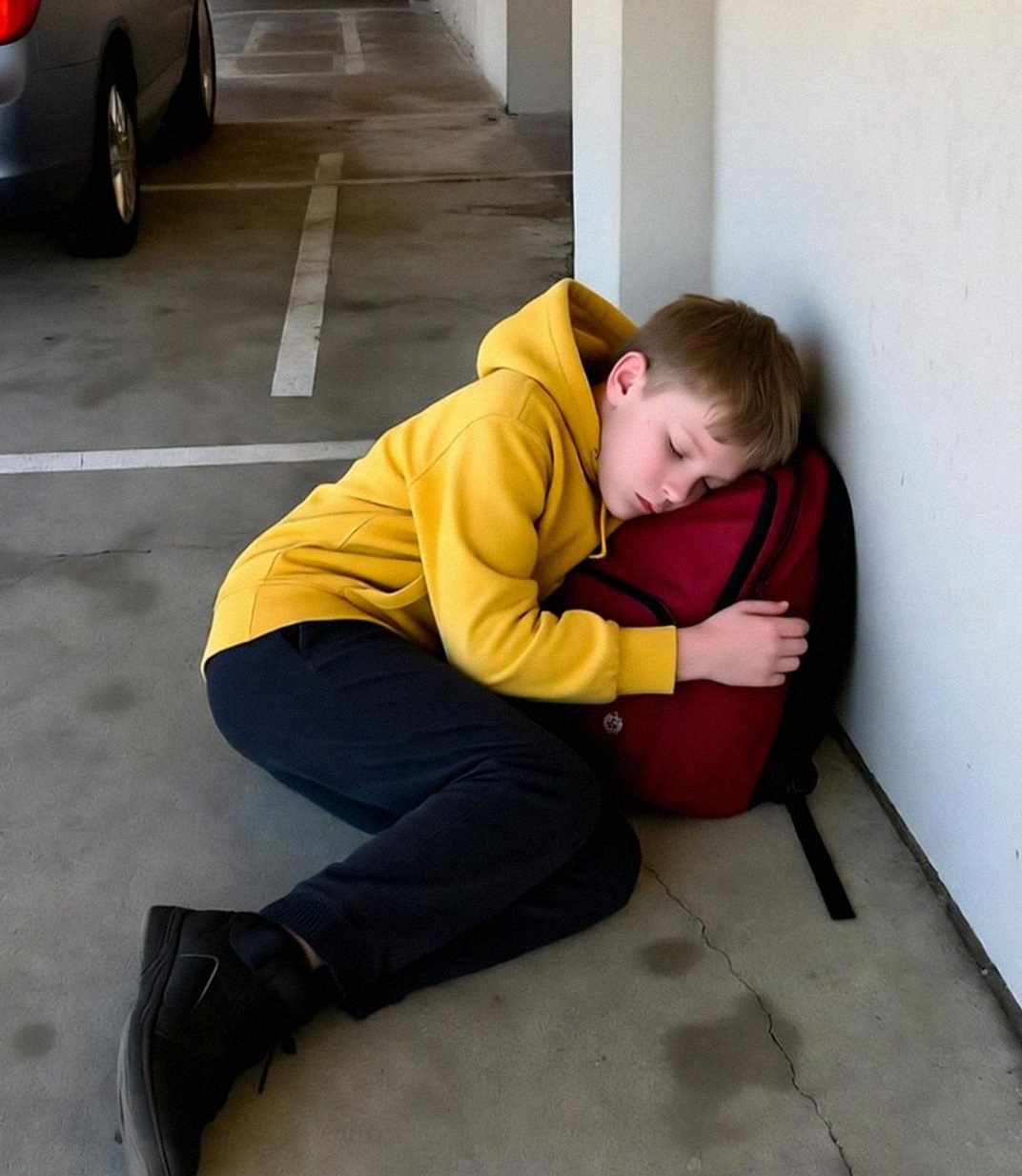
When I found my brightest student curled up in a freezing parking garage that November night, my heart broke into a thousand pieces. But when he told me why he was there, I knew there was only one thing I could do.
I’m 53 years old, and I’ve been teaching high school physics in Ohio for over 20 years. My life has been filled with other people’s children. I’ve watched thousands of students walk through my classroom doors, taught them about gravity and momentum, and cheered when they finally understood why objects fall at the same rate regardless of their weight.
Each “lightbulb moment” has been my fuel, the thing that reminds me why I keep coming back to that classroom year after year.
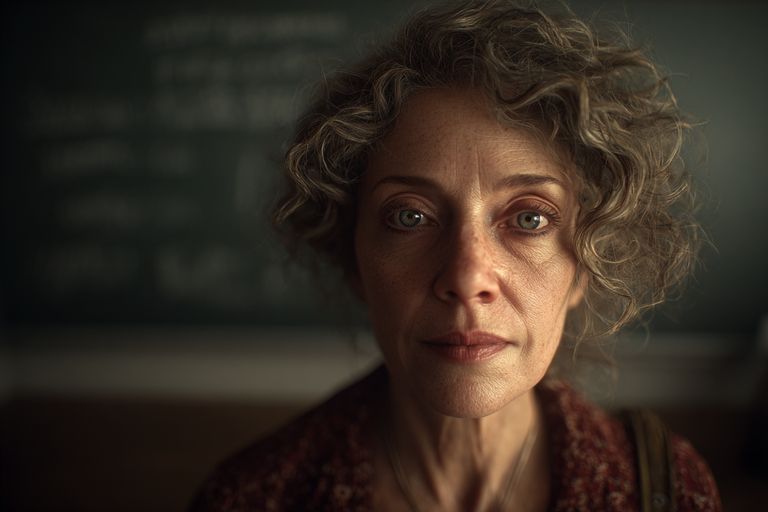
But I never had children of my own. That empty space in my life has always been the quiet echo behind my proudest days, the shadow that lingered even when everything else looked fine on the surface.
My marriage ended 12 years ago, partly because we couldn’t have kids and partly because my ex-husband couldn’t handle the disappointment that came with each failed attempt. Those doctor visits, those hopeful test results that always turned negative chipped away at us until there was nothing left.
After the divorce, it was just me, my lesson plans, and the echo of my footsteps in an empty house that felt too big for one person.
I thought that was my story. A dedicated teacher who poured all her maternal instincts into her students, then went home to microwave dinners and grade papers in silence. I’d made peace with it, or at least I thought I had. I convinced myself that loving my students like they were my own was enough, even when the loneliness crept in late at night.
Then Ethan walked into my AP Physics class.
From the first day, he was different. While other students groaned about equations and complained that physics was too hard, Ethan lit up. He’d lean forward in his seat when I explained complex theories, his eyes bright with curiosity.

“Ms. Carter,” he’d say after class, “can you explain more about black holes? I read that time moves differently near them, but how is that possible?”
Most kids his age were thinking about weekend parties or video games, but Ethan was contemplating the mysteries of the universe. He stayed after school for hours, working through problems that weren’t even assigned. Sometimes he’d bring me articles he found online and ask if they were accurate, hungry to know what was real and what was speculation.
I drove home smiling, thinking about his questions and his infectious enthusiasm.
“This boy is going to change the world,” I’d tell myself as I unlocked my front door to another quiet evening.
Ethan saw beauty in complex equations. Where others saw numbers, he saw poetry. He once told me that physics felt like “reading the language God wrote the universe in,” and I believed him.
During his junior year, he won the regional science fair with a project about gravitational waves. I was so proud I nearly cried during his presentation. His parents didn’t show up, but I clapped louder than anyone else.
That summer, he took advanced online courses and read physics textbooks for fun.
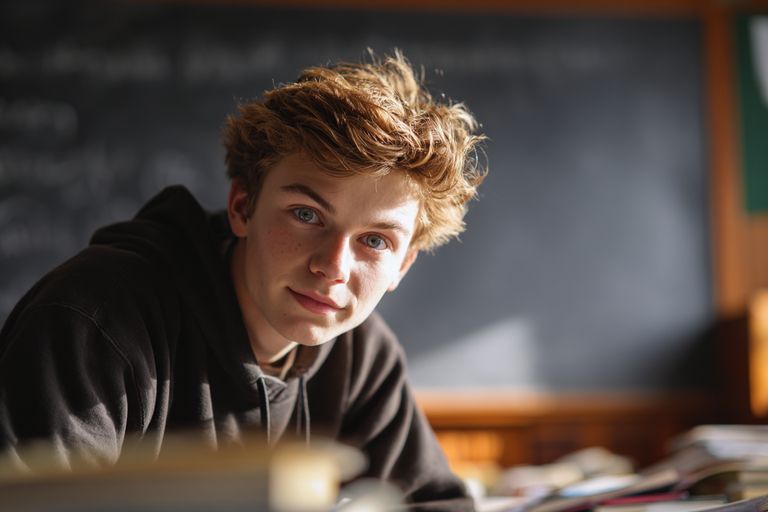
When senior year started, I expected scholarships and recruiters. I imagined him graduating with medals around his neck.
But then something changed.
Homework came in late or not at all. He started arriving just as the bell rang. Dark circles appeared under his eyes. The spark dimmed.
“Ethan, is everything okay?” I asked.
“I’m fine,” he said. “Just senior year stress.”
But I knew better. He put his head down during lectures. His questions stopped. I tried again and again, but “I’m fine” became his shield.
The truth revealed itself on a freezing Saturday night in November.
I had a bad cold and drove to the grocery store for cough syrup. The parking garage was dim and nearly empty. As I walked, I noticed a shape behind a pillar.
Then it moved.
Someone was curled up on the concrete, using a backpack as a pillow.
I recognized the sneakers.
“Ethan?” I whispered.
His eyes flew open in terror.
“Please don’t tell anyone,” he begged.
My heart shattered.
“What are you doing here?” I asked.
“They don’t even notice when I’m gone,” he said. “My dad and stepmom have parties. Strangers everywhere. Sometimes I can’t even get to my bedroom.”
He had been sleeping there for three nights.
“Come with me,” I said. “You’re coming home.”
That night I made him soup and grilled cheese. He showered, put on clean clothes, and slept on my couch. I watched him breathe, knowing everything had changed.
The next morning, he said it was temporary. I said no child should sleep on concrete.
Getting guardianship wasn’t easy. His father fought me out of pride, not love. At the hearing, Ethan testified.
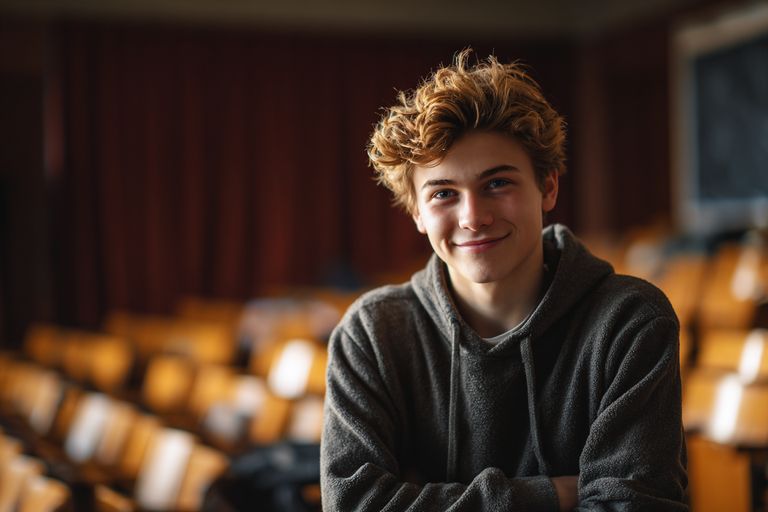
“They don’t care about me,” he said. “I don’t feel safe.”
The judge granted me temporary guardianship. Six months later, it became permanent.
Ethan flourished. Straight A’s. Scholarships. Science competitions.
Sometimes he called me “Mom” by accident. I never corrected him.
Three years later, he graduated valedictorian with a full scholarship in astrophysics.
At his honors ceremony, he took the microphone.
“I wouldn’t be here without one person,” he said. “Ms. Carter found me sleeping in a parking garage. She became the mother I never had.”
He placed his medal around my neck.
“This belongs to you, Mom.”
Then he announced he had legally changed his name to carry mine.
As the audience stood and cheered, I realized my life hadn’t ended quietly after all.
Sometimes family isn’t about blood. Sometimes it’s about showing up.
