When I bought a meal for a shivering boy turned away from a café, I thought I was just doing a small act of kindness. But when he vanished and I learned his real identity the next day, my entire world changed in ways I never saw coming.
When you’ve spent 30 years teaching children, you learn to spot the ones who are hurt. It’s something in their eyes, a quiet desperation they try to hide behind forced smiles and careful words. That November evening, I saw those same eyes staring through a café window, and I knew I couldn’t just walk away.
My name’s Grace. I’m 56 years old, and I’ve dedicated most of my life to shaping young minds in a classroom that’s seen more tears, triumphs, and transformations than I could ever count. Teaching isn’t just what I do… It’s who I am.
When my husband, Robert, died nine years ago after fighting an illness that stole him piece by piece, the joy I once found in my work became the only thing keeping me from drowning in silence.
We never had children. Not because we didn’t want them, but because life had other plans.
That particular evening, the wind cut through the streets like a knife. The sky hung low and threatening, the kind of gray that promised rain before morning. I clutched my briefcase as I walked home from school, my coat doing little to stop the cold from seeping into my bones.
The streets were nearly empty except for a few people hurrying past the warm glow of storefronts and cafés. That’s when I saw him.
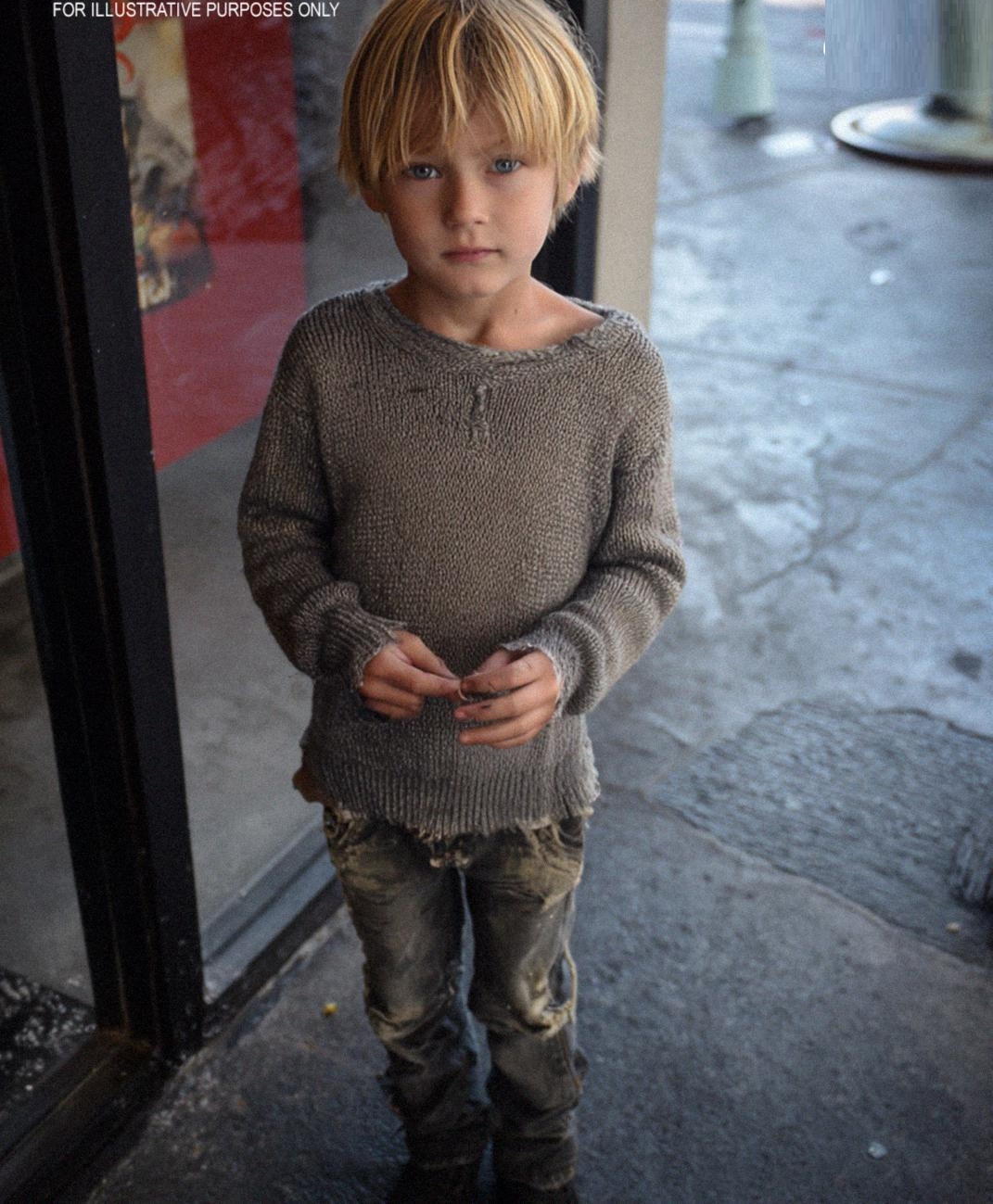
A little boy stood near the entrance of a café called The Corner Bean. He couldn’t have been more than seven or eight. His sweater was threadbare, his jeans damp, his shoes barely holding together.

But it wasn’t his clothes that stopped me. It was the way he stood there, staring through the window at people inside sipping hot drinks. His lips were bluish, and he clutched a single coin. He was shaking.
I stepped closer.
“Sweetheart, are you alright? Where’s your mom?”
He jumped and looked at me with big brown eyes full of fear and exhaustion.
“My mom will be here soon,” he said quietly. “I just wanted to go inside to warm up. But they said I couldn’t stay without ordering.”
He pointed at the café window. “I wanted to buy a cookie, but I didn’t have enough. I just asked if I could sit by the heater.”
My heart twisted. I’d seen that kind of quiet desperation too many times.

“Come with me, honey. Let’s get you something to eat.”
The warmth of the café wrapped around us. I guided him to a table near the heater. He sat stiffly, hands folded, like he was afraid he’d get in trouble.
I ordered a hot tea, a grilled cheese sandwich, and a chocolate muffin. When I brought the food, he hesitated before taking a bite. His eyes fluttered shut, a tear sliding down his cheek.
His name was Eli. Seven years old.
“I’ve been staying with different people,” he whispered. “Friends of my mom’s. But I don’t have anywhere to stay right now.”
“Where did you sleep last night?” I asked gently.
“There’s a spot under the bridge near the park. It’s not too bad if you have a blanket.”

I nearly choked on my tears.
He added quickly, “I didn’t want to bother anyone. I just wanted to warm up.”
“You didn’t bother me,” I said. “You did nothing wrong.”
We talked about books, about his old dog, about his mom who used to sing to him. I didn’t push for more.
When he finished eating, I went to pay.
Two minutes. That’s all.
When I turned back, the chair was empty. The door was still swinging from the wind.
“Eli!” I ran outside. But he was gone.
I didn’t sleep that night. I called every shelter. I even called the police. Nothing.

The next morning at school, I was summoned to the principal’s office. A social worker was waiting.
“Did you help a young boy last night? Brown hair, torn sweater?”
“Yes,” I said. “Is he okay?”
“He’s safe. Police found him near the river. He told them about you.”
I exhaled shakily.
Then the social worker continued:
“Eli’s parents died in a car accident last year. He’d been living with a distant aunt and uncle, but they abandoned him three weeks ago. He has no family left.”
My breath caught.
“But he said his mother was coming…”

“He was afraid. Children who’ve been through trauma lie to protect themselves.”
“Does he have anyone at all?”
“No. He’s completely alone.”
The words came out of me instantly:
“Then I want to take him in.”
Three weeks of paperwork, interviews, and home checks later, Eli came to live with me.
He stood in the doorway of his new room, staring at the fresh blue comforter.
“Is this really mine?”
“Every inch of it,” I said.

He was quiet at first, moving like he didn’t want to disturb anything. But little by little, he began humming, drawing pictures, sleeping through the night.
One night, he said softly, “Goodnight, Mom.”
I nearly cried. “Goodnight, sweetheart.”
I knew then that he wasn’t the only one who’d needed saving.
A month after he moved in, a lawyer came to my door. He represented Eli’s late parents.
“They set up a trust for him,” he said. “It was meant to go to his legal guardian when he turned seven. That guardian is now you.”
Inside the envelope he handed me was a letter:
“To whoever is caring for our son if we cannot, may this help you build the life he deserves. Thank you for loving him in our place.”

I held the letter and sobbed. I didn’t help Eli for any reward. I helped him because no child deserves to stand out in the cold, hungry and alone.
But somehow, in helping him, I found joy and purpose again.
Now, our life is full.
We bake cookies.
We read together.
We laugh.
Every night, we share what we’re grateful for.
Eli says, “I’m grateful for my mom.”
And I say, “I’m grateful for my son.”
That cold November evening, I thought I was saving a little boy.
But he saved me just as much.
