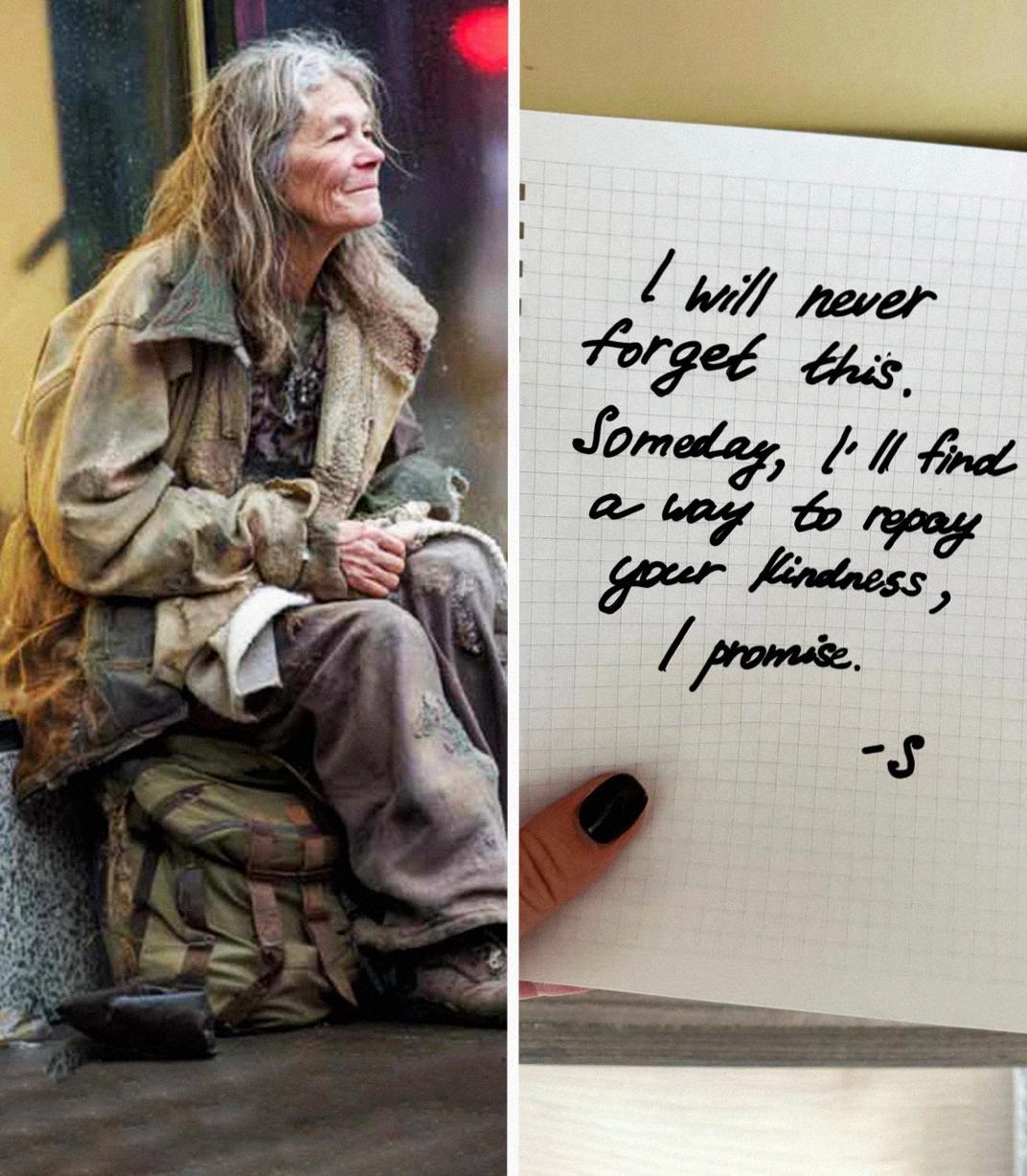
The night I let a shivering stranger sleep in my garage, I never imagined she’d remember my name. Five years later, when my boss called me into his office with that serious look on his face, I had no idea that the same woman was waiting for me on the other side of the door.
My name is Marta, and I’m 38 years old. I’m a single mother to three amazing kids who mean absolutely everything to me. Alex is 10 now, responsible beyond his years. Nina just turned eight, and she’s got the biggest heart of anyone I know. Then there’s Tomás, my baby at five years old, who still thinks I can fix anything with a kiss and a hug.
Life has never been simple for us, but my children are the reason I wake up every morning and keep pushing forward.
I work during the day as an administrative assistant at a small logistics company downtown. The pay isn’t amazing, but it’s steady work with benefits. Twice a week, I pick up evening cleaning shifts in the same building after everyone else goes home.
Most evenings, I walk through the door long after sunset. Sometimes, I fall asleep on the couch before the kids even finish telling me about their day, and I hate myself a little for that. But they understand, or at least they pretend to, which somehow makes it worse and better at the same time.
There are quiet moments, usually late at night after I’ve tucked them all into bed, when I feel the crushing weight of doing everything alone. The silence stretches too long, and I wonder how much further I can possibly push myself before something breaks. My body? My spirit? Both?
But then morning comes, and I see their sleepy faces at breakfast, and somehow I find the strength to do it all over again.
That rainy evening five years ago started like any other exhausting Thursday. I’d just finished my regular shift and was heading to the grocery store before picking up the kids from my neighbor’s house.

The sky had opened up without warning, dumping cold rain that soaked through my thin jacket within seconds. I was running through the parking lot, mentally calculating whether I had enough for milk and bread, when I saw her.
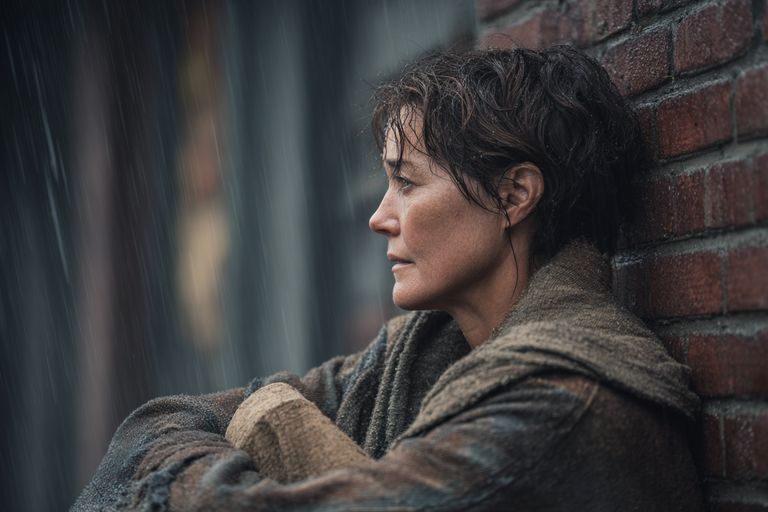
She was huddled against the brick wall outside the store, trying to shield herself from the rain under a tiny overhang that barely covered her shoulders. She looked to be in her mid-50s, with short brown hair plastered to her face and kind eyes that looked so tired and lost. Her coat was threadbare, offering no real protection from the cold. She was shivering violently, her arms wrapped tightly around herself.
I’d walked past homeless people before, always feeling guilty but telling myself I barely had enough for my own family. But that night was different. Maybe it was the way the rain ran down her face like tears, or maybe it was because she reminded me of my mother, who’d passed away two years earlier. Whatever it was, I couldn’t just walk by.
I stopped and walked over to her.
“Excuse me, are you okay?”
She looked up, startled, as if she hadn’t expected anyone to notice her.
“I’m fine, thank you,” she replied.
“You’re freezing,” I said gently. “Do you have somewhere to go tonight?”

Her eyes filled with tears, and she shook her head slowly.
“Not tonight. I’ll figure something out.”
I stood there for a moment, rain soaking through my shoes, thinking about my own warm house. It wasn’t much, but it was dry and safe.
“I’m Marta. Come with me,” I heard myself say. “I have a garage behind my house. You can stay there tonight.”
“You don’t even know me,” she said.
“I know you need help,” I replied. “And I can give you that much, at least.”
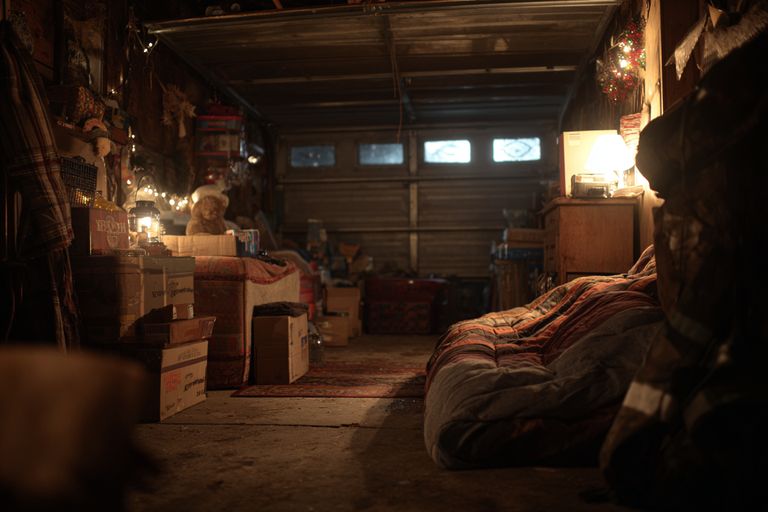
That night, I helped her settle into the garage. It wasn’t much—just boxes of old toys and holiday decorations—but it was dry and insulated.
I set up our space heater in the corner, brought her one of my thick winter blankets, and made her a cup of hot tea with extra honey.
“Thank you,” she whispered as she held the cup. “You didn’t have to do this for me.”
“I know I didn’t have to,” I said. “But nobody should have to sleep outside in weather like this.”
I didn’t ask her questions about how she ended up on the streets. She looked exhausted, her eyes heavy with something deeper than just physical tiredness.
“You can stay the night,” I told her softly. “Maybe two nights if you need to. Just until you figure out what to do next.”
She nodded, tears sliding down her cheeks.
“God bless you, Marta. God bless you and your children.”
When I finally went to bed that night, I couldn’t stop thinking about her—the way she’d thanked me, the way she’d said my name like it was something precious.
But the next morning, when I went to the garage to bring her breakfast, the door was open and the space was empty.
The blanket was neatly folded. The cup was rinsed and placed on the table. Next to it sat a folded piece of paper.
“I’ll never forget this. Someday, I’ll find a way to repay your kindness.”
There was no signature. Just a single letter: S.
I slipped the note into my wallet, between my kids’ school photos, where it stayed.
Five years later, life hadn’t become easier, but it had become manageable. The kids grew. I stayed at the same job. Every day was routine, survival stitched together by love and exhaustion.
Then one Thursday morning, my desk phone rang.
“Marta, could you come to Mr. Grant’s office, please?”
My heart dropped.
He was serious, professional—never one for surprises.
When I sat down, he looked at me kindly.
“Do you remember a woman you helped about five years ago?” he asked. “You gave her shelter for a night.”
I froze.
“Yes,” I whispered.
“She came here yesterday,” he said. “She’s been looking for you.”
My breath caught.
He explained that after that night, she rebuilt her life. She found work, then purpose. She created a nonprofit that helped women rebuild theirs. And she never forgot me—not for a single day.
Then he opened the door.
She stood there—transformed, confident, radiant.
“Marta,” she said softly. “I told you I’d find you.”
She took my hands and said, “You gave me hope when I had nothing. Now I want you to help me give that hope to others.”
She offered me a job at her foundation.
I accepted through tears.
Now, every morning, I walk into a place built on compassion. I see women finding their footing again. I see lives restarting.
And every time I open my wallet, I see that old note.
Kindness given freely always finds its way back home.
