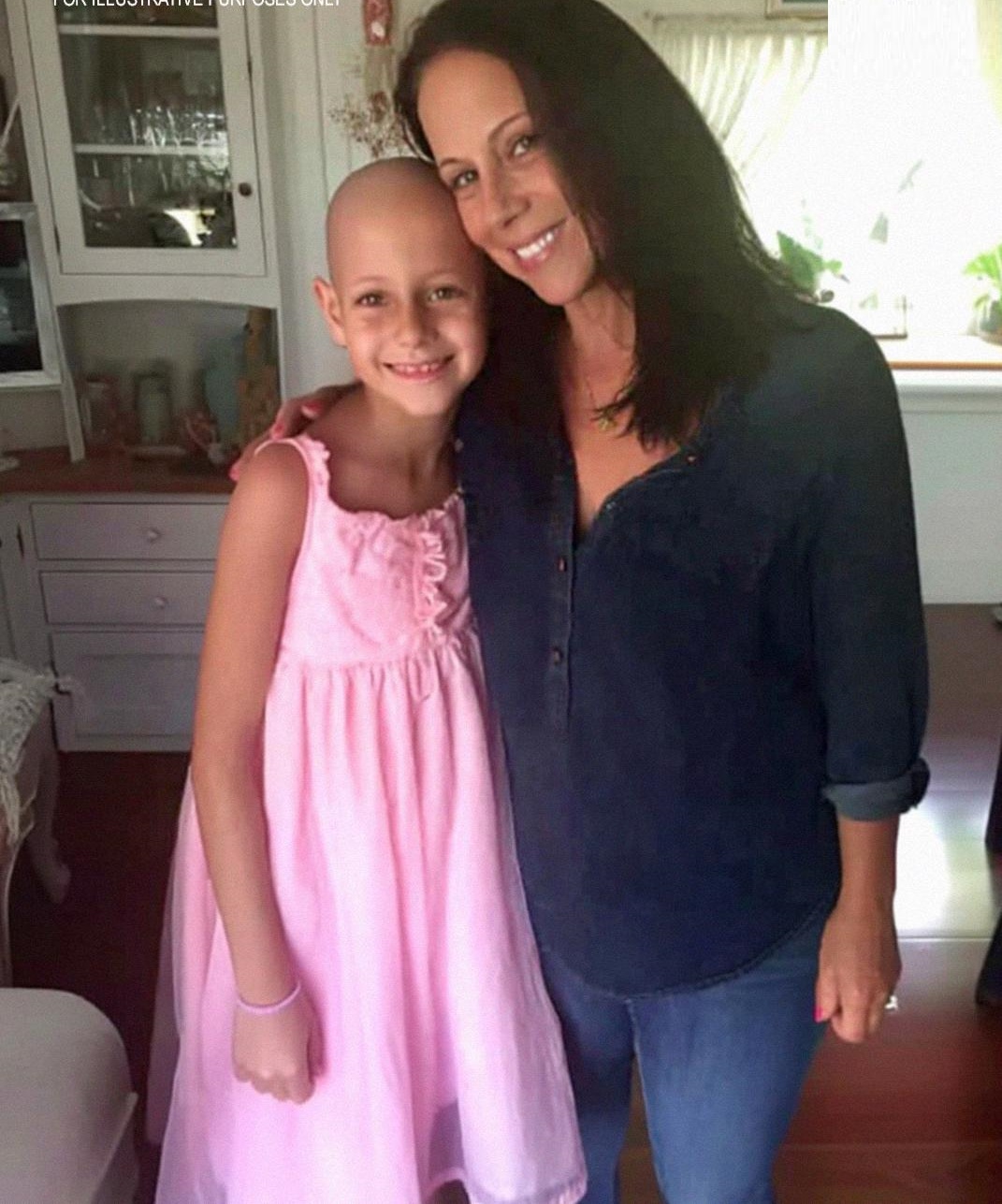
When everyone else walked away from an orphaned little girl battling cancer, I chose to stay and adopt her. What I didn’t know was that love has a way of coming back around, sometimes in ways you never see coming.
For years, people asked me the same question at family gatherings, work parties, and anywhere strangers felt entitled to my life story: “Are you married? Do you have kids?”
And every single time, I had to smile through the sting and say, “No. Just me.”

What I never said was how much that answer cost me. How many nights I’d cried myself to sleep. And how many baby showers I’d attended with a smile plastered on my face while my heart cracked a little more.
“I’m 48 now, and I’ve made peace with being alone. Or at least, I’ve learned to pretend I have. But why does it still hurt so much?” I used to ask myself every single time someone asked about my life.
When I was younger, I imagined a different life. Noisy Saturday mornings with pancakes burning on the stove. Tiny socks disappearing in the laundry. Crayon drawings covering the fridge. A house full of chaos and laughter and love.
Then the doctors told me I’d never carry a child because my body simply couldn’t do it.
I tried everything. Fertility treatments that drained my savings and my hope. Medications that made me sick. Prayers whispered in cold clinic waiting rooms. But every test came back the same way, and eventually, I had to accept the truth.
Dating became a minefield after that. Some men said they understood. They’d hold my hand and promise it didn’t matter. But weeks or months later, when reality sank in, I’d see it in their eyes. Pity first. Then disappointment. Then distance.
One by one, they all left.
So I stopped waiting to be chosen and learned to choose myself instead.
I bought a small house at the edge of town with two bedrooms, a front porch with a swing, and way too much space for one person. I filled it with books, plants, and all the things people collect when they’re trying not to feel lonely.
But no matter how much I redecorated, the silence always crept back in.
The idea of adoption whispered in the back of my mind for years. I kept pushing it away, telling myself I was too scared, too old, too settled in my routines.
But the thought never left. It grew louder with every lonely breakfast, every quiet weekend, every holiday spent alone.
One gray Tuesday afternoon, after pouring coffee for one and staring at the empty chair across from me, I finally decided it was time.
I drove to the children’s shelter on the outskirts of town, my hands shaking on the steering wheel the entire way.
The building was older, painted a cheerful yellow. Inside, it smelled like crayons and cleaning supplies. Children’s voices echoed down the hallways.
Kids were everywhere — building block towers, coloring, playing tag. Their laughter should’ve been carefree, but I sensed the weight they carried.
Then I saw her.
A small girl sat alone by the window. She wore a knitted hat pulled low over her head and held a popsicle in her thin little hand.
She looked up when I approached. Her eyes were huge, brown, and far too sad for someone her age.
“That’s beautiful,” I said, looking at her drawing. “What is it?”
“A house,” she whispered.
“Is it yours?”
She shook her head. “No. It’s the one I want someday. With big windows so I can see the stars.”
My heart squeezed. “That sounds perfect.”
She studied me shyly. “I’m Lila.”
Mrs. Patterson, the staff member, appeared beside me. Her voice softened. “She’s been here about a year. Bounced through several foster homes before that. Her illness… it’s been hard for families.”
“Illness?” I asked.
“Leukemia. Diagnosed at five. It came back last spring. She needs ongoing treatment.”
Lila looked up at me again. “Do you think anyone would want me? Even if I get sick again?”
The question broke something inside me.
I touched her cheek gently. “Sweetheart… I think someone already does.”
The adoption process took weeks, but finally, Lila came home with me.

Her first night, she stood in her new bedroom, eyes wide. “This is mine?”
“All yours,” I said. “For as long as you want.”
She didn’t want to sleep alone. So I stayed with her until she drifted off, clutching my hand.
A few nights later, I found her crying in her sleep.
“What’s wrong?” I whispered.
She looked at me through tears. “Mom?”
My breath caught. She’d never called me that before.
“Yes, sweetheart. I’m right here.”
From that moment, she was mine.
The first month flew by with hospital appointments, medication schedules, and quiet evenings watching movies together. She loved strawberry pancakes and hated oatmeal. She insisted we bake cookies even when she was too tired to stand.
We were learning each other.
Then, one Wednesday morning exactly a month after she moved in, everything changed.
A deep, steady rumbling outside made my windows vibrate.
I looked out.
A long black limousine sat in front of my house — flanked by five black sedans.
Men in dark suits stepped out. One tall, silver-haired man walked to my porch.
“Are you Lila’s guardian?” he asked.
“Yes… who are you?”
“My name is Mr. Caldwell. I’m an attorney representing an estate. There’s something important you need to know.”
Inside, he explained everything.
Lila’s biological parents, Robert and Emily, died in a car accident when she was a baby. They had set up a trust for her — large, carefully protected, and meant to activate only when she was adopted by someone who genuinely loved her.
“They wanted to ensure their daughter would always be cared for,” Mr. Caldwell said. “Not by someone motivated by money, but by love.”
He handed me an envelope sealed with wax.
A letter inside read:
To our dearest Lila,
If you’re reading this, it means we’re watching over you from somewhere better. We wanted to make sure love would find you again — real love, freely given.
To the person who becomes her family: thank you. Please care for our little girl. She was our whole world.
With love,
Mom and Dad
I pressed the letter to my heart, tears falling.
“Mom?” Lila’s quiet voice came from the hallway.
I gathered her into my arms. “Your parents loved you so much. They made sure you’d always be taken care of.”
A week later, Mr. Caldwell showed us the house her parents had left for her.

A two-story home with white shutters and a wraparound porch. Tulips and daisies grew wild in the garden.
“Mom,” Lila whispered, “it looks just like the house I always draw.”
“Maybe,” I said softly, “you were remembering it all along.”
Inside, sunlight spilled through the windows. On the mantle was a photo of a young couple holding a baby wrapped in a yellow blanket.
“They look nice,” she said.
“They were. And they loved you more than anything.”
“Do you think they’re happy I found you?”
“I think they’re celebrating.”
With the inheritance, I could get Lila the specialist she needed. Her energy slowly returned. She ran through the garden, chased butterflies, and laughed until it echoed off the trees.
Her doctors began using words I never thought I’d hear again:
Improvement. Response. Remission.
One afternoon she told me, “Maybe my first parents picked you.”
“What makes you say that?”
“You came exactly when I needed you.”
By autumn, the doctors confirmed it — Lila was in remission.
We moved into her parents’ house that winter. She painted her room lavender, planted tulips for “both my moms,” and slept under glow-in-the-dark stars.
Three years passed.
Lila is now thirteen. Healthy. Bright. Happy. Her parents’ letter hangs framed on the wall, touched every morning before school.

I used to think I wasn’t meant for motherhood — that life had closed that door forever.
But maybe I was just waiting for her.
Lila was born twice: once into this world, once into my heart.
And both times, she was perfect.
