I’m Emily, and I thought I was just helping a tired old man find a pair of shoes, but the truth about who he really was left the whole store speechless and changed my future forever.
When I got into college, I thought things were finally starting to fall into place.
I’d spent the last two years clawing my way through grief and debt. My parents died in a car accident just after I graduated high school, and what should’ve been a new beginning turned into a tragedy I never saw coming. My aunt, who was supposed to be my guardian, took the small inheritance they left behind and disappeared before orientation week even began.
So yes, I was on my own.

I rented a tiny studio above a laundromat and lived on gas-station ramen and half-price bagels from the café where I worked weekends. I juggled two part-time jobs and a full class load, with sleep becoming a luxury I couldn’t afford. Most nights, I fell asleep on my textbooks and woke up minutes before my alarm.
That was my reality until I landed an internship at Chandler’s Fine Footwear.
The name sounded elegant, like something from an old black-and-white movie. The store itself looked polished, filled with soft lighting and the smell of leather, but beneath the shine, it was just another snake pit in heels.
My coworkers, Madison and Tessa, were model-gorgeous and effortlessly cruel. Caroline, the store manager, wore stilettos like armor and had a smile that could slice glass. They whispered when I passed and treated every move I made like an inconvenience.
On my first day, I wore a thrifted blazer, a too-small dress shirt, and loafers held together by glue.
“Cute jacket,” Madison said. “My grandma has one.”
“At least she’ll match the elderly customers,” Tessa added.
I smiled and swallowed the humiliation.
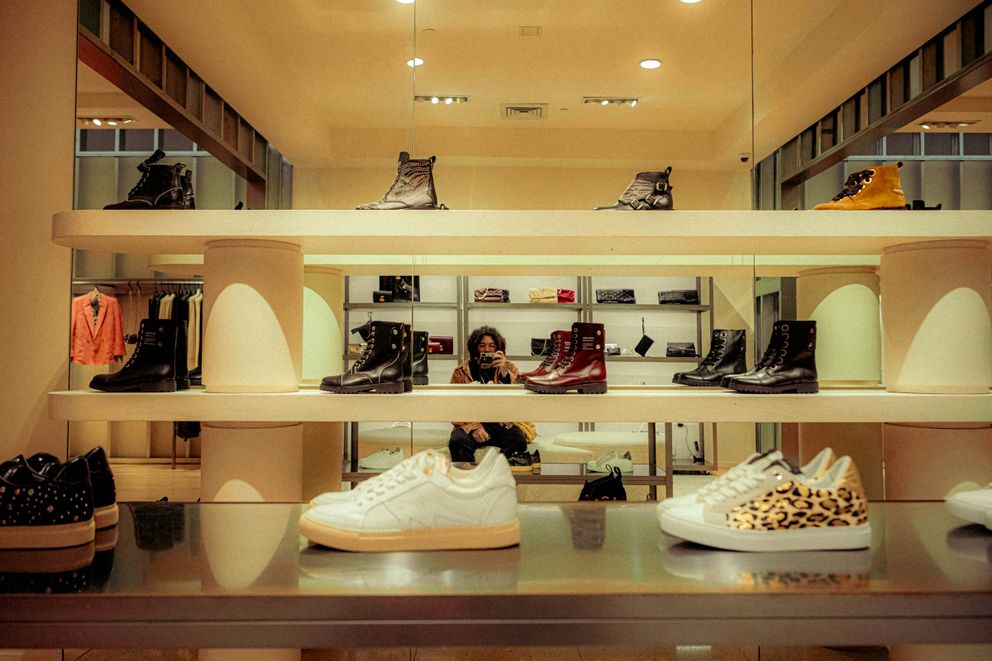
Chandler’s wasn’t really about shoes. It was about wealth. Caroline drilled one rule into us on day one: focus on buyers, not browsers. Translation—judge people the moment they walk in.
“If someone doesn’t look rich,” she said, “don’t waste your time.”
It was a quiet Tuesday when the bell above the door rang.
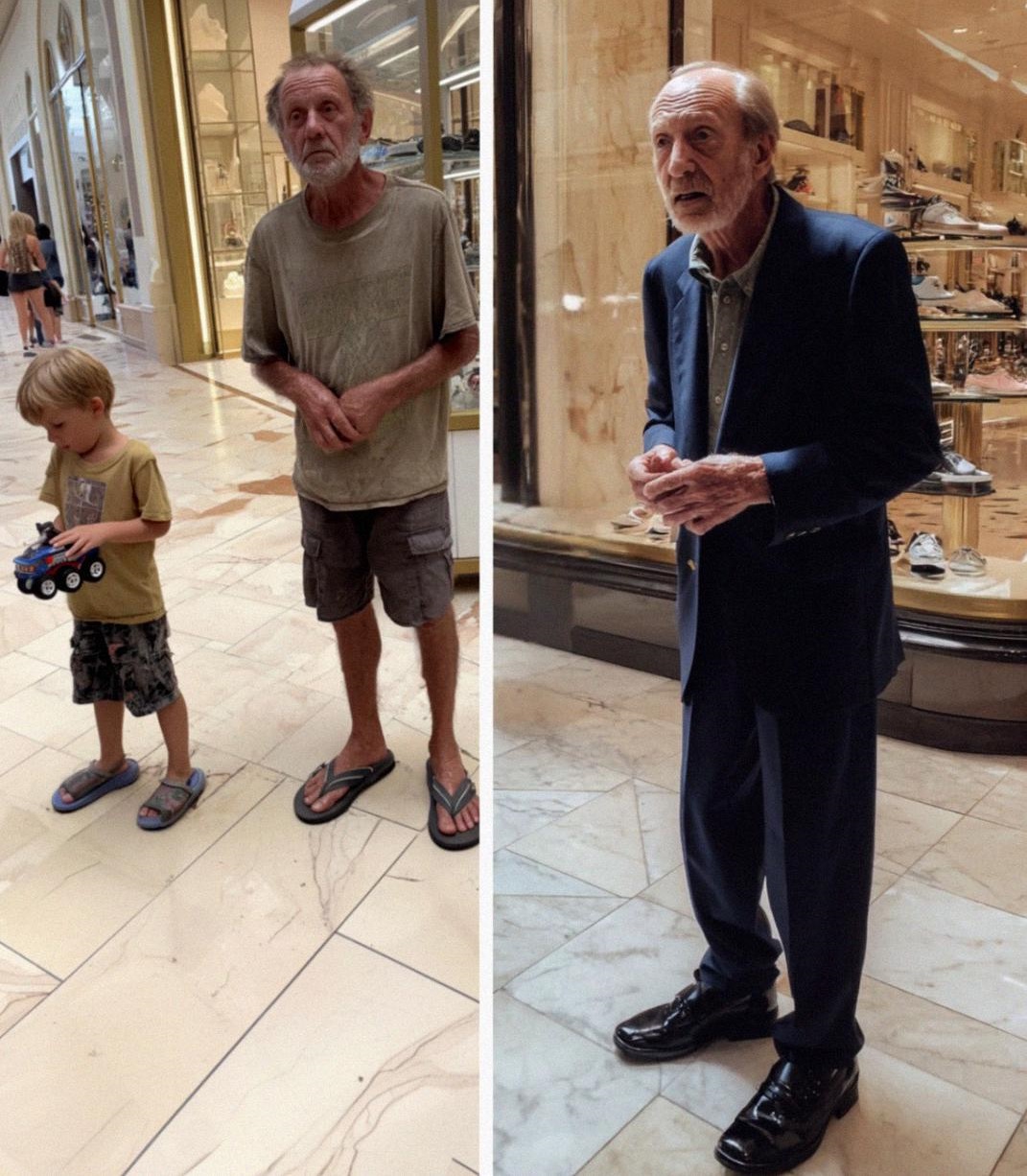
An older man walked in holding the hand of a young boy. He looked about seventy, wearing faded cargo shorts, a wrinkled T-shirt, and worn sandals. His hands were rough, stained with grease. The boy clutched a toy truck, dirt smudged across his cheek.
Every head turned.
“I can smell poverty,” Madison whispered.
Caroline crossed her arms. “He’s in the wrong store.”
The man smiled gently. “Do you mind if we take a look?”
“These shoes start at nine hundred dollars,” Caroline said sweetly.
“I figured,” he replied calmly.
The boy’s eyes lit up. “Grandpa, they shine!”
No one moved.
So I did.
I welcomed them and asked his size. He looked surprised, then grateful.
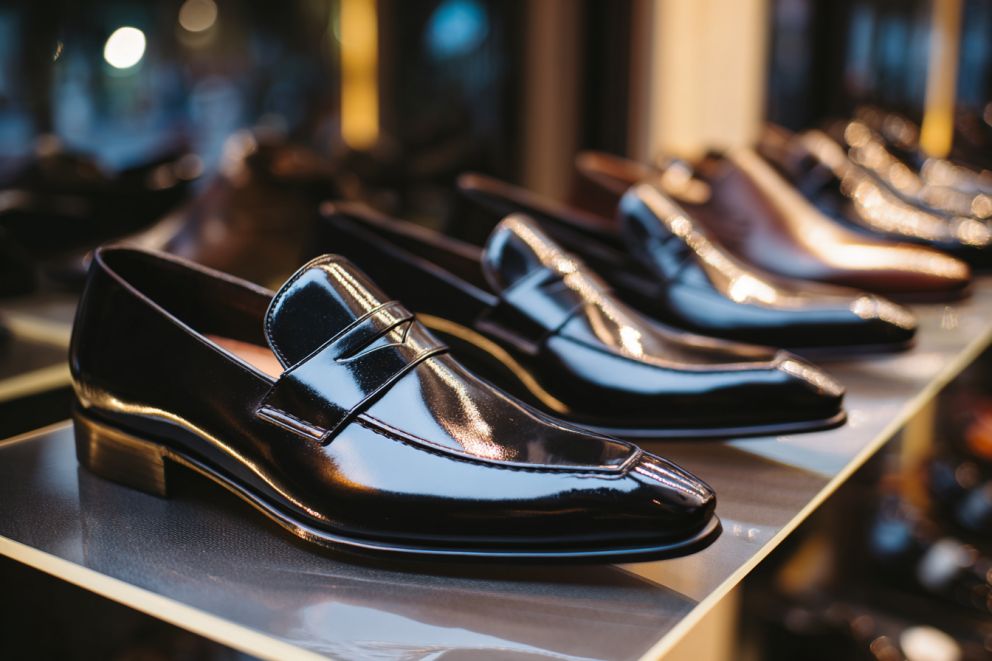
I brought him our finest pair—Italian leather, hand-stitched. He slipped them on carefully, as if afraid to damage them.
“They’re comfortable,” he said softly.
Caroline appeared instantly. “Please be careful. Those are expensive.”
“Good things usually are,” he replied.
The boy grinned. “You look fancy, Grandpa!”
Caroline pulled me aside. “Wrap it up. We have real customers.”
“He is a customer,” I said.
“Not the kind who buys.”
The man stood slowly. “Come on, champ. We’ll go somewhere else.”
“Some places just don’t see people like us,” he said quietly as they left.
Caroline laughed it off. “Don’t waste time on people like that.”
“You never know who you’re talking to,” I said.
Tessa scoffed. “Sure. Maybe he’s the president.”
The next day, Caroline was frantic.
“Corporate visit,” she snapped. “No mistakes.”
Around noon, a black Mercedes pulled up outside.
Caroline froze. “Posture, everyone.”
The door opened.
It was him.
The same man—but now in a tailored navy suit, polished shoes, and calm authority. The boy stood beside him, dressed neatly, holding the same toy truck. Two suited men followed behind them.
Caroline tried to speak, but her voice failed.
The man looked past her and smiled at me.
“It’s you again,” he said.
He explained they’d stopped by after a fishing trip the day before.
“What I saw,” he continued, “was a reminder that expensive doesn’t always mean classy.”
Then he pulled out a card.
“I’m Mr. Chandler,” he said. “Owner and founder of this company.”
The store went silent.
He looked at Caroline. “You judged me by my clothes and told your employee to ignore me.”
“You shouldn’t need to know someone’s name to treat them like a person.”

Then he looked at me.
“But she did.”
“You’re dismissed,” he told Caroline. “Effective immediately.”
To Madison and Tessa, he said, “You might want to consider different industries.”
Finally, he turned back to me.
“How long have you been with us?”
“Three months.”
“Would you like to stay longer?”
“Yes,” I whispered.

“You’re the new assistant manager,” he said. “Compassion is the best qualification there is.”
The boy tugged my sleeve. “I told you she was nice.”
A week later, I started my new role.
I threw out the rule about judging customers by appearance.
Mr. Chandler visited often—usually in flip-flops and a fishing hat, always with his grandson. He bought shoes just to donate them later, saying kindness mattered more than excess.
That day didn’t just change my career. It changed how I see the world.
Real wealth isn’t money. It’s character. It’s grace. It’s how you treat people when there’s nothing to gain.
Kindness isn’t weakness.
It’s strength.
