I thought the hardest part of losing my mom would be saying goodbye, but that was before I found my wife alone in my childhood house, acting strange. What started as a quiet visit turned into the unraveling of a secret that changed everything I believed about my marriage.
After my mom’s funeral, I went to her house and found my wife there—then I uncovered a secret she’d hidden from me for years. My name’s Kevin. I’m 38 years old, and here’s my story.
I’ve been married to my wife, Meredith, for nine years. We met when we were both 28. At the time, we were still fumbling through adulthood, bouncing between crappy apartments and jobs that didn’t feel like they mattered. But we mattered to each other. At least, that’s what I thought.

Over time, the love between us settled into something quiet but strong, stitched together by morning routines and bedtime stories. We have a six-year-old daughter named Emma, and she’s our world.
Three weeks ago, my mom passed away.
She had been battling health problems for a while, but no matter how prepared you think you are, death hits different when it finally shows up. She was my only parent. My dad left when I was a kid, and Mom raised me on her own. Losing her felt like losing the ground beneath me.
The funeral was small and simple. She had asked for simple, and we honored that. Just a few close friends, a few neighbors, and a handful of worn memories. After it ended, everything felt too quiet.
Two days later, I suddenly felt the urge to go to her house. I told Meredith over breakfast, and she questioned the timing, but I said I needed something to do. She said she’d join me later.
On the way, I stopped by my best friend Jake’s house to drop off some tools, but he wasn’t home. That meant I arrived at Mom’s earlier than expected.
Her house looked the same as always — but Meredith’s car was already in the driveway.
At first, I thought she came early to help. But when I got to the front door, my stomach twisted. The lock was busted, like someone had forced it open.
I stepped inside and called her name. The house was too still. Then I noticed a faint light glowing from beneath the basement door.
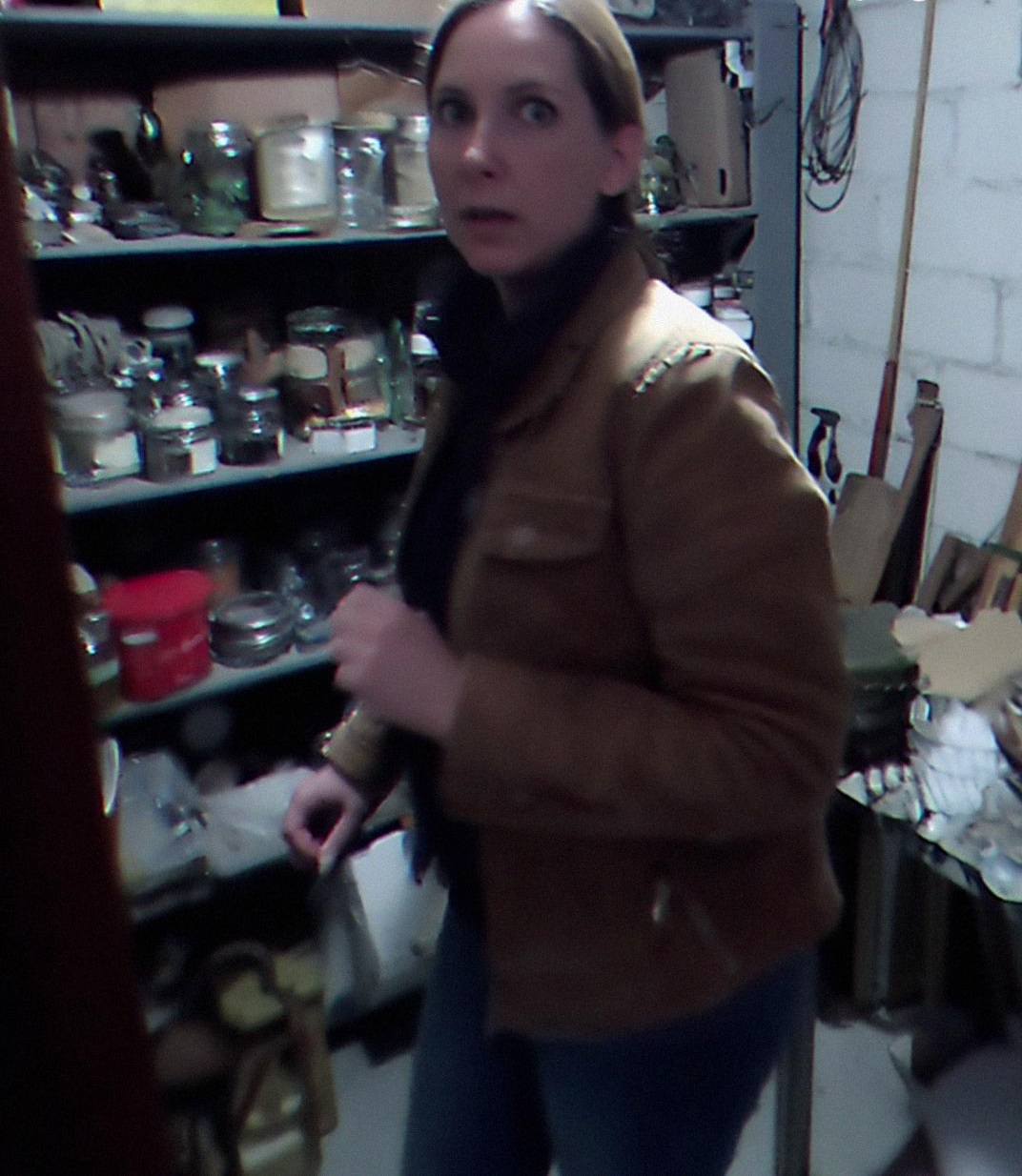
I grabbed a candlestick for protection and walked downstairs. At the bottom, I saw Meredith. She was going through boxes near the back wall, stiff and startled when she saw me.
“What are you doing here?” I asked.
She claimed she just wanted to help, but she didn’t have a key — so she broke in.
She was nervous, defensive, and kept blocking the shelves behind her. I knew she was hiding something
 .
.
I sent her upstairs under the pretense of helping in Mom’s bedroom. When she left, I tore through the basement for nearly two hours trying to figure out what she’d been searching for.
Finally, I found a dusty old box hidden behind paint cans. Inside was a brown folder tied with string.
When I opened it, my breath caught.
There were photographs — some grainy, some very clear — of Meredith, years younger, with a man I didn’t recognize. They were kissing, hugging, holding hands. Some photos were taken in a hotel. Others looked like dates.
There were also notes, dates, and a private investigator’s report. My mom’s name was written neatly at the top.
My mom had hired a PI. She had known.
I stormed upstairs. Meredith was folding clothes on the bed, humming. I threw the folder onto the nightstand, and the photos spilled across the floor.
“What is this?” I shouted.

She broke down crying. It happened seven years ago, two years into our marriage. She said I was always working, she was lonely, and she made “the stupidest mistake of her life.” My mom confronted her back then, threatened to tell me unless she ended it, and she did.
I asked her the question that nearly tore me apart: “Is Emma mine?”
She swore she was. She had secretly done a DNA test years ago to make sure. She begged me to believe her.
I was overwhelmed. Hurt. Angry. Betrayed.
Meredith admitted she came to the house because she panicked after Mom died — afraid Mom might have kept the evidence. She wanted to destroy it before I found it.
“You weren’t protecting me,” I said. “You were protecting yourself.”
She had no argument.
After she left the room, I cleaned up the photos — and that’s when I found a small envelope tucked inside the folder.
It was addressed to me. In my mom’s handwriting.
Inside was a letter:
She wrote that she hadn’t told me because she wanted to give Meredith the chance to change. She had seen her grow, become a better partner and mother, and she didn’t want the past to destroy my future.
She didn’t ask me to forget — only not to let it ruin everything good in my life.
Her words shook me.
That night, I didn’t go straight home. I sat at the old park where I used to ride my bike, just thinking, trying to breathe.
When I finally returned, Meredith was curled on the couch, crying quietly. I told her about the letter and that I believed her — but that I was hurt and needed time. I said I might forgive her someday, but she’d never get another chance to break my trust.
She nodded, devastated.
We spent the evening in silence.
The next morning was painfully normal. Emma asked if we could visit Nana’s house. It nearly broke me, but I told her, “Maybe next weekend.”
Later, Meredith asked to talk. She told me the full story — the man’s name was Brandon, someone from work. It was one weekend. She ended it immediately after my mom confronted her.
She said she lived with the guilt every day.

I told her I wished I’d heard the truth from her, not from a dusty folder buried in a basement.
Now, we’re in therapy. Some days I feel closer to forgiving her. Other days I can’t even look at her without remembering those photos.
But then I look at Emma — sweet, bright, innocent — and I remember why I’m trying.
My mom was right: forgiveness isn’t forgetting.
It’s choosing to protect what matters, even after everything breaks.
