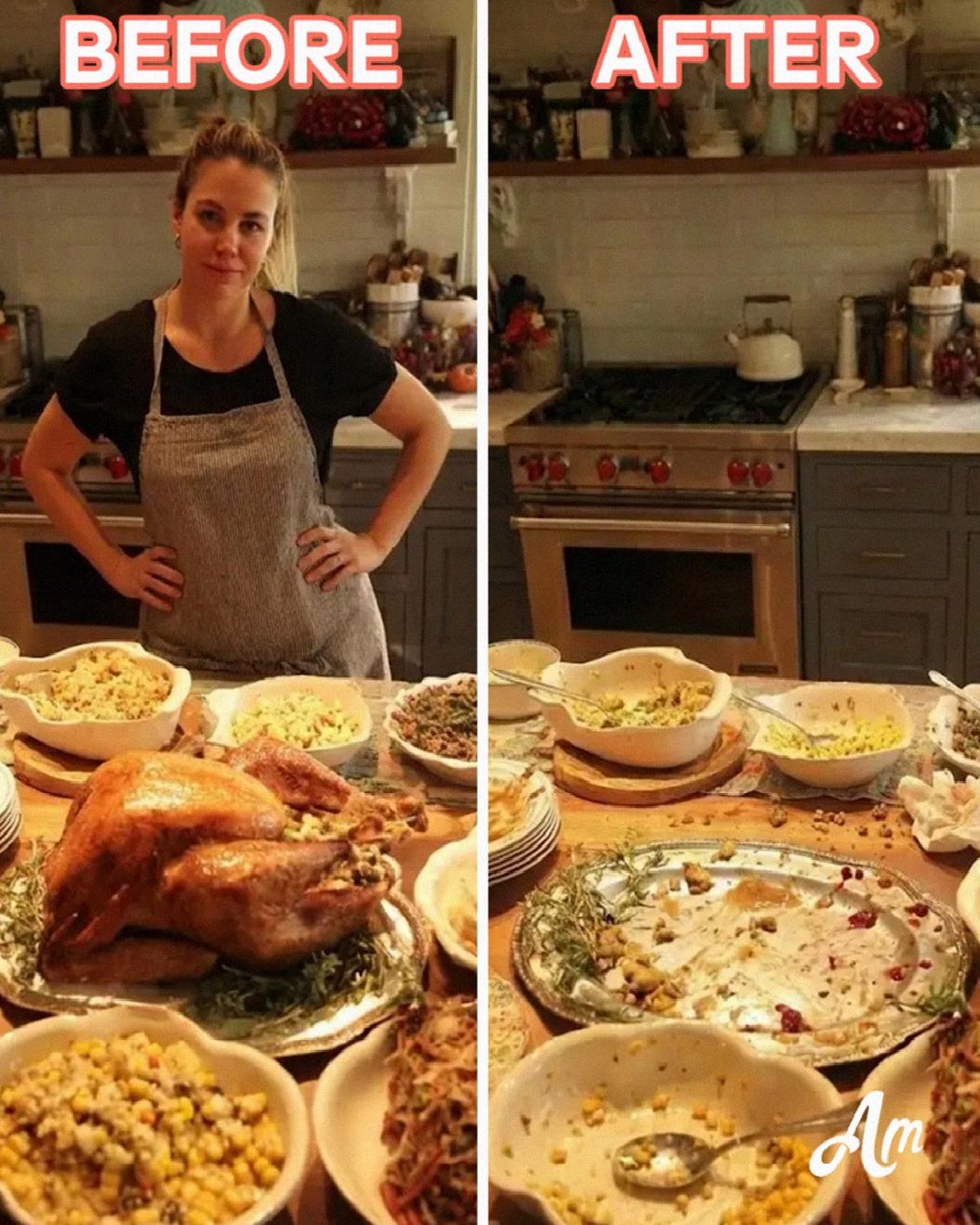
For 12 years, my mother-in-law criticized everything I did. But when she walked into my house on Thanksgiving with bags of her own food and told me to throw mine in the trash, I decided it was time she learned exactly what kind of cook I really was.
I’m Ava. I’m 38 years old, and I’ve been married to Mark for 12 years. Twelve long, complicated, sometimes wonderful years that have been shadowed by one constant presence: my mother-in-law, Cheryl.

From the moment Mark slid that ring on my finger, Cheryl made it her personal mission to fix me. To mold me into whatever vision she had of the “perfect wife” for her precious son. And I never measured up—not once in 12 years.
She criticized everything. The way I folded Mark’s shirts. How I organized the pantry. The way I loaded the dishwasher. She’d show up unannounced, let herself in with the spare key Mark insisted she keep, and run her finger across my countertops like she was conducting a health inspection.
“Ava, sweetheart,” she’d say in that syrupy voice, “you really need to work on your housekeeping skills.”
Or, “Honey, I always ironed Mark’s father’s shirts. It’s what wives do.”
Or my personal favorite: “You really should learn how to cook properly. Mark deserves home-cooked meals, not experiments.”
I bit my tongue every single time—for Mark, who loved his mother despite her invasive nature, and for my kids, who adored their grandmother. Family peace always seemed to matter more than my sanity.
But last Thanksgiving, Cheryl didn’t just cross a line. She obliterated it.
For as long as I’d been part of the family, Cheryl had hosted Thanksgiving at her house. Every year. And no one was allowed to bring food unless she specifically requested it. She believed “too many cooks spoil the broth.”
So every year, I showed up empty-handed while she basked in compliments like a celebrity chef.
Then, two weeks before Thanksgiving, disaster struck. A pipe burst in her house, causing major damage. She couldn’t host.
Mark looked at me hopefully when she called in a panic.
“We could host it here,” I said, surprising even myself. “I’ll take care of everything.”
Cheryl hesitated, then said, “Well… if you’re sure you can handle it.”
That little dig only fueled me.
On Thanksgiving morning, I woke up at 5 a.m. I brined the turkey overnight. I cooked everything from scratch—stuffing, sweet potatoes, cranberry sauce, pies. I set the table with care and pride.

My kids told me it looked amazing. Mark kissed my cheek and said I’d outdone myself.
For the first time in years, I felt like I was enough.
Then Cheryl arrived.
She didn’t knock. She came in carrying five enormous grocery bags filled with her own food.
“Well,” she said, looking around, “it’s certainly… cozy.”
She unpacked her dishes and said she couldn’t let the family down. They expected a certain standard.
When I told her I’d cooked everything myself, she smiled pityingly and said the family came for her food. She suggested throwing mine away.
“You cook horribly,” she said.
Something inside me snapped—but I stayed calm.
“You’re right,” I said sweetly. “Why don’t you go relax? I’ll handle everything.”
She happily agreed and left the room.
That’s when I went to work.
I took every one of Cheryl’s dishes and quietly transferred my food onto her fancy platters. Her food went into plain containers and straight into the back of the fridge.
When dinner was served, the house filled with people. Compliments poured in.
“This is the best turkey you’ve ever made!”
“These sweet potatoes are incredible!”
Cheryl smiled and accepted every compliment—until she tasted the food and realized it wasn’t hers.

After about 20 minutes, I stood up.
“I’d like to make a toast,” I said.
I thanked Cheryl for always sharing her opinions about my cooking. Then I revealed the truth.
Every dish they loved—I made it.
The room erupted. Some people laughed. Others stared at Cheryl in shock.
Her face turned red, then purple. She stormed out without a word.
Mark looked at me and said quietly, “That was overdue.”
The rest of the evening was perfect. People asked for recipes. They had seconds and thirds. They told me I should host every year.
A week later, Cheryl called.
She apologized.
She admitted the food was excellent. She admitted she’d never given me a fair chance.
It wasn’t a perfect apology—but it was real.
Now, she doesn’t show up unannounced. She doesn’t criticize everything I do.
Last week, she asked if we could co-host Thanksgiving and if I’d make that turkey again.
I said yes.
Because what I learned is this: sometimes people need to be humbled before they can learn respect. You have to stand up for yourself—even when it’s uncomfortable.
Cheryl learned I’m a damn good cook.
But more importantly, she learned I’m not someone to be pushed around.
And when the moment comes, serve your truth on their finest china.
Trust me—it tastes delicious.
