I spent years being dismissed and belittled while keeping our home and family running. It wasn’t until something happened that landed me in the hospital that my husband finally noticed something was wrong.
This year, I am 36 and married to Tyler, who is 38. From the outside, we looked like the perfect family, but the truth was far from that. When Tyler mistreated me while I wasn’t well, that was the straw that broke the camel’s back.

Some people on the outside, who knew my husband and me, would describe us as the “American dream.” And in a sense, we were. I lived in a cozy four-bedroom apartment with two young boys, a manicured lawn, and a husband who had a flashy job as a lead developer for a gaming studio.
Tyler earned more than enough to sustain our lifestyle, so I stayed home with the kids. Sadly, most people assumed I had it easy. But behind closed doors, I felt like I was suffocating.
Now, don’t get me wrong—Tyler was never physically abusive, but his words were sharp, calculated, and constant, making him cruel. I know that’s not an excuse or a way to say he was better because the pain he inflicted didn’t show, but I’d convinced myself it was at least bearable.
Every morning in our house started with a complaint, and every evening ended with a jab. He had a way of making me feel like a failure, even when I was doing my best to hold everything together.
His favorite insult came out every time the laundry wasn’t folded or dinner wasn’t hot enough.
“Other women work and raise kids. You? You can’t even keep my lucky shirt clean,” he’d complain, and I’d oblige by trying harder.
That shirt. I’ll never forget that cursed white dress shirt with the navy trim. He called it his “lucky shirt,” as if it were some kind of holy relic. I had washed it a dozen times before, but if it wasn’t hanging exactly where he expected it, I was suddenly useless.
It was a Tuesday morning when everything unraveled.
I had been feeling off for days but never really took it seriously. Dizzy. Nauseous. Completely drained. I assumed it was a bad stomach bug or the flu. But I pushed through—packing lunches, sweeping crumbs, making sure the boys didn’t fight over toys.
I even managed to make banana pancakes that morning, hoping maybe Tyler would smile for once.
When he stomped into the kitchen half-awake, I forced a cheerful, “Morning, honey.” The boys echoed me with bright enthusiasm.
Tyler didn’t respond. He grabbed dry toast and disappeared into the bedroom, muttering about a big meeting.
I mentally kicked myself for hoping the pancakes would help.
“Madison, where’s my white shirt?” he barked from the bedroom.
“I just put it in the wash with the whites,” I said.
He stared at me in disbelief. “I asked you to wash it three days ago! You know that’s my lucky shirt! I have a major meeting today. You can’t even handle one task?”
“I forgot. I’m sorry. I’ve been feeling really off lately.”

He ignored me.
“What do you even do all day, Madison? Sit around while I pay for this house? One job. One shirt. You eat my food, spend my money, and you can’t even do this? You’re a leech!”
I stood frozen, hands shaking.
“And that friend of yours downstairs—Kelsey or whatever—you spend all day gossiping, but nothing gets done!”
“Tyler, please…” I whispered.
A wave of nausea hit me, sharp and sudden. My abdomen burned. The room spun. I reached for the wall.
He scoffed, changed shirts, and slammed the door on his way out.

By noon, I could barely stand. Every step felt heavy, wrong. My vision blurred. The pain became unbearable.
I collapsed in the kitchen just as the boys finished lunch.
I remember them screaming. Noah cried. Ethan ran out of the apartment to get help.
I don’t remember the sirens clearly. Only flashes.
Later, I learned Ethan ran to our neighbor Kelsey, who took one look at me and called 911. The boys stayed with her as I drifted in and out of consciousness.
Tyler came home expecting dinner and order. Instead, the apartment was dark and silent.
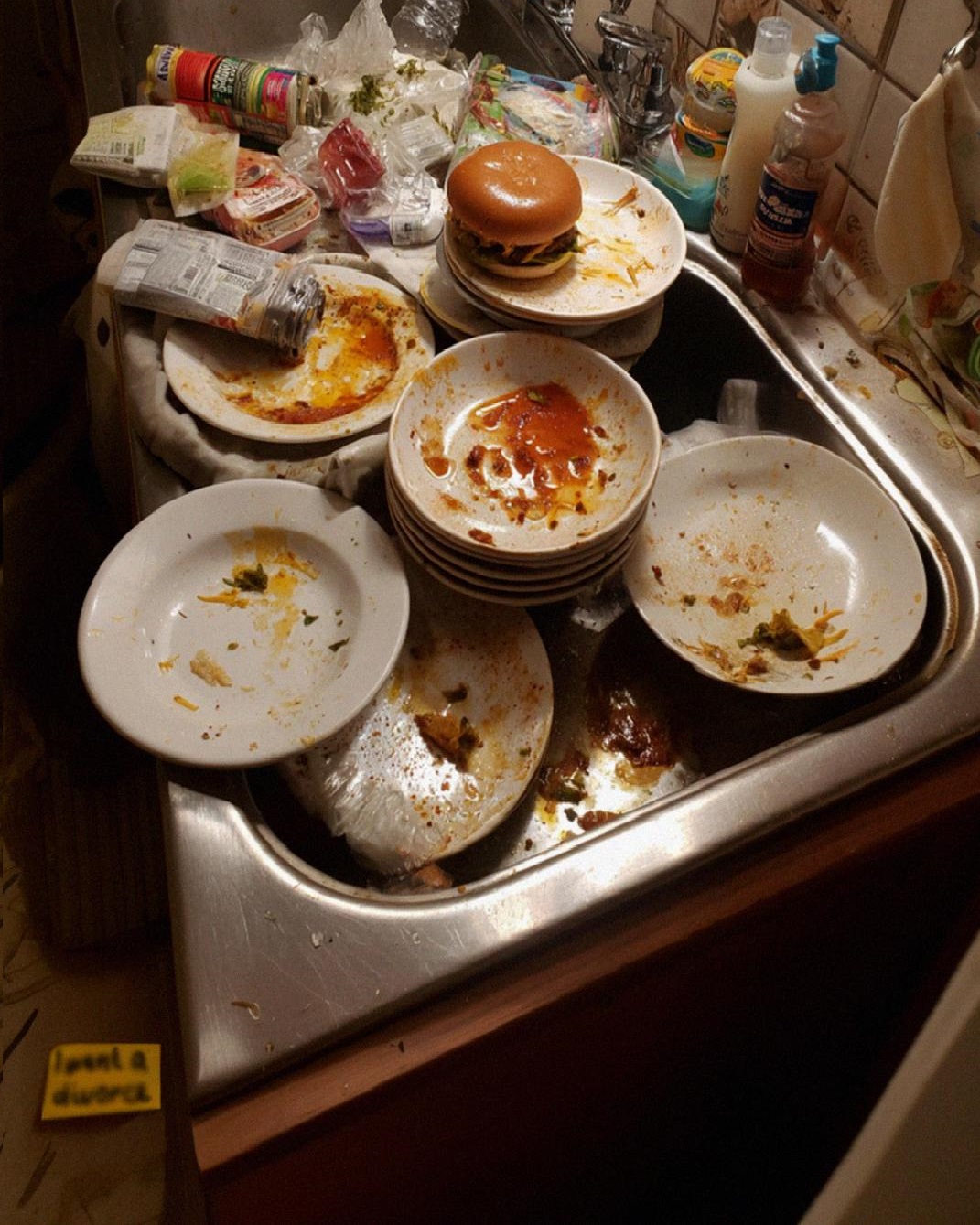
He found my purse on the counter. The fridge door open.
And a note on the floor.

“I want a divorce.”
He panicked. Dozens of missed calls. No answers.
He called my sister Zara, who told him the truth: I was in the hospital, pregnant with our third child. The boys were safe. The hospital had tried to reach him all day.
Tyler left the apartment shaking.
At the hospital, I was hooked to IVs and monitors—dehydrated, exhausted, pregnant.
He held my hand. I hated the feeling.
“I didn’t know,” he whispered. “I didn’t know you were this sick.”
For the first time in years, Tyler saw the damage he had caused.

While I recovered, he took care of the boys. He cooked. Cleaned. Read bedtime stories. I overheard him crying on the phone to my mother.
“How does she do this every day?”
But I remembered the note.
When I was stable, I filed for divorce. I didn’t argue. I didn’t shout.
He didn’t fight it.
“I deserve this,” he said.
Over the months, he showed up. Therapy. Appointments. School projects. Groceries.

At the 20-week ultrasound, the technician smiled. “It’s a girl.”
Tyler wept.
When our daughter was born, he cut the cord with shaking hands.
But I had learned not to confuse remorse with change.
Months passed. He stayed consistent. Present. Hopeful.
When the boys ask if we’ll ever live together again, I smile softly.
“Maybe.”
The word carries everything I’m not ready to promise.
