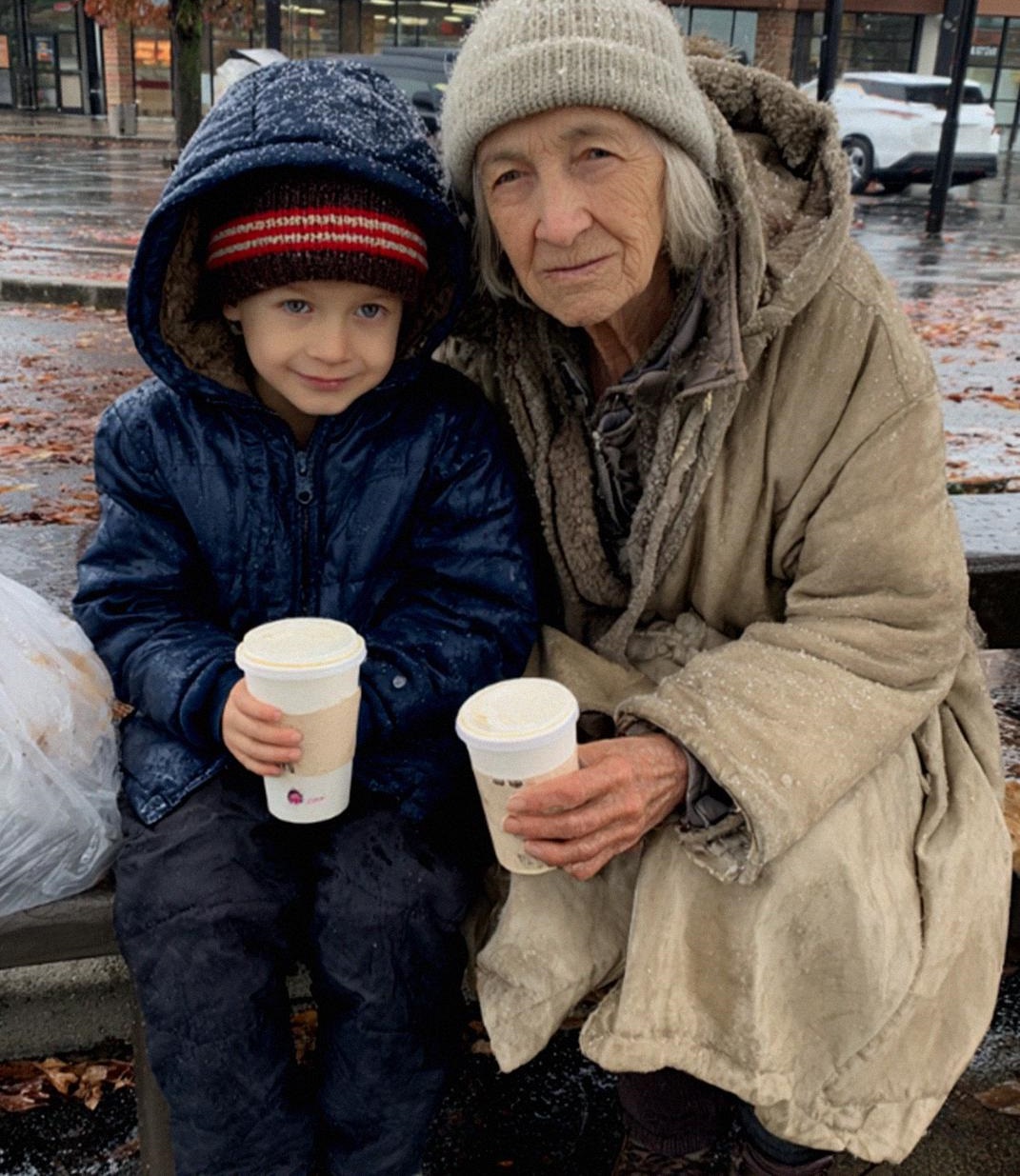
On a freezing Thanksgiving evening, I offered a simple act of kindness to a grandmother and her quiet grandson. Days later, a stranger showed up at my door with a truth that unraveled everything, and what began as a small gesture became the reason a family’s future was rewritten.
Thanksgiving is supposed to feel warm. It’s supposed to be comfort in chaos and finding gratitude in everything we do.
This year, mine started with a spreadsheet and ended with a stranger’s child wrapped around my waist in a tight hug.
I’m Brenda, an accountant for a mid-sized firm downtown. It’s not a glamorous job, but it’s stable. Or it was — until my boss decided Thanksgiving week was the perfect time to threaten firing anyone who dared look at the clock.
I worked until six that evening, exhausted, while my husband, Andrew, texted photos of our half-defrosted turkey and flour-covered kitchen. Our daughters, Noelle and Nina, messaged me too, full of excitement and impatience.
By the time I left the office, I was running on fumes.
I stopped at the grocery store for “just a few things” and left with a full bag of Thanksgiving emergencies. The wind had turned sharp by the time I reached the parking lot, and I hurried toward my car, already picturing the chaos at home.
That’s when I noticed them.
An older woman and a little boy stood near the edge of the lot. She held his hand, and he leaned into her side. They looked worn but clean, like life had taken more than it gave. His coat was thin, zipped to his chin, and he was shivering.
They walked toward my car.

I hesitated, then lowered the window.
“I’m embarrassed to ask,” the woman said softly, her voice trembling. “But could you please buy something for my grandson to eat? My wallet was stolen, and I don’t know how we’re going to get home. He’s hungry, and I just need him to eat.”
I didn’t ask questions. I stepped out of the car.
“Come on,” I said. “Let’s get you warm first. I’m Brenda.”
Inside the store café, a kind teenager made them hot dogs and tea. The boy, Mason, stared at the food like it might disappear. While they ate, I grabbed sandwiches, juice boxes, chips, and an extra pie.
Mason held a juice box like it was treasure.
“Thank you,” he whispered.
The grandmother, Elsie, explained that her wallet had been stolen on the bus. She’d tried to visit her daughter — Mason’s mother — but was turned away.
“She never wanted children,” Elsie said quietly. “Not ever.”
My chest tightened.
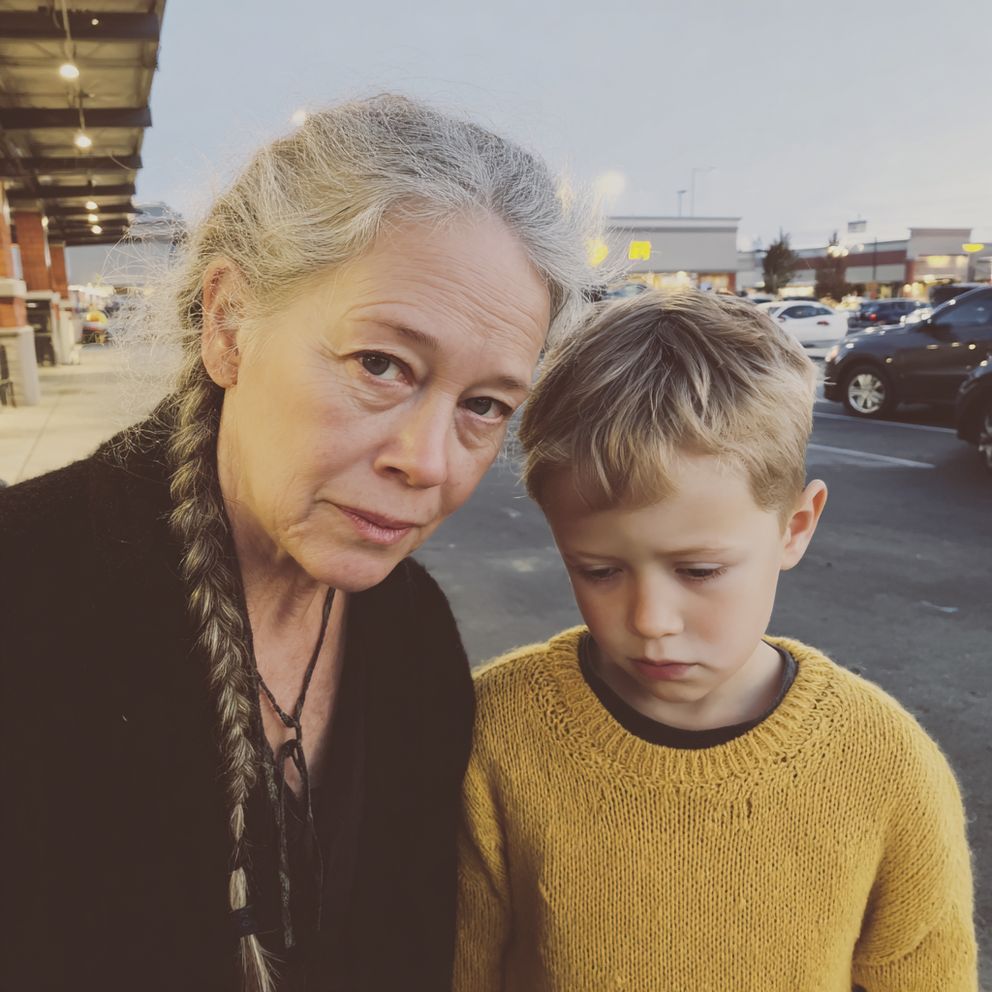
I bought them bus tickets and drove them to the station. Before they boarded, I wrote down my name, number, and address.
“Just in case,” I told her.
Mason hugged me tightly before they left, and I watched the bus disappear, my car heater blasting while my chest still felt cold.
Thanksgiving at home was warm and loud. Andrew didn’t burn the turkey. The girls were happy. Later, alone in the shower, I cried — not from sadness, but from exhaustion and hope that Mason would be okay.
I thought that was the end of it.
A week and a half later, Andrew called me at work.
“Brenda,” he said, his voice shaking. “You need to come home. Now.”
“It’s about the boy and the woman from Thanksgiving,” he whispered.
I didn’t ask questions. I ran.
Three black SUVs were parked outside our house.
Inside, a man stood waiting. He was calm, well-dressed, and carried himself like someone used to responsibility.
“My name is Matthew,” he said. “You helped a woman and a little boy recently. That boy is my son.”
The room spun.
He explained everything. Years earlier, he’d been in a relationship with a woman named Celia. She left without warning. He never knew she was pregnant.
Elsie — the woman I helped — was Celia’s mother.
Celia abandoned the baby at the hospital. Elsie raised Mason alone. Recently, she reached out to Matthew after her health began failing. When Celia rejected her again on Thanksgiving, everything unraveled.
Meeting me, Matthew said, gave Elsie the strength to keep going.
He found her. He met Mason. A DNA test confirmed the truth.
“I missed five years,” Matthew said quietly. “But because of you, I found my son.”
He handed me an envelope — a check for my daughters’ future education.
“You didn’t just feed a hungry child,” he said. “You gave him his father.”
He left soon after.
That night, I said yes when my daughters asked for cookies before dinner. Later, when the house was quiet, I lit a candle and stood alone in the kitchen, the silence feeling earned instead of empty.
Sometimes, the smallest kindness — a hot meal, a bus ticket, a hug — sets something greater in motion.
And sometimes, without realizing it, you become the reason someone finds their way back to the people they were meant to love.
