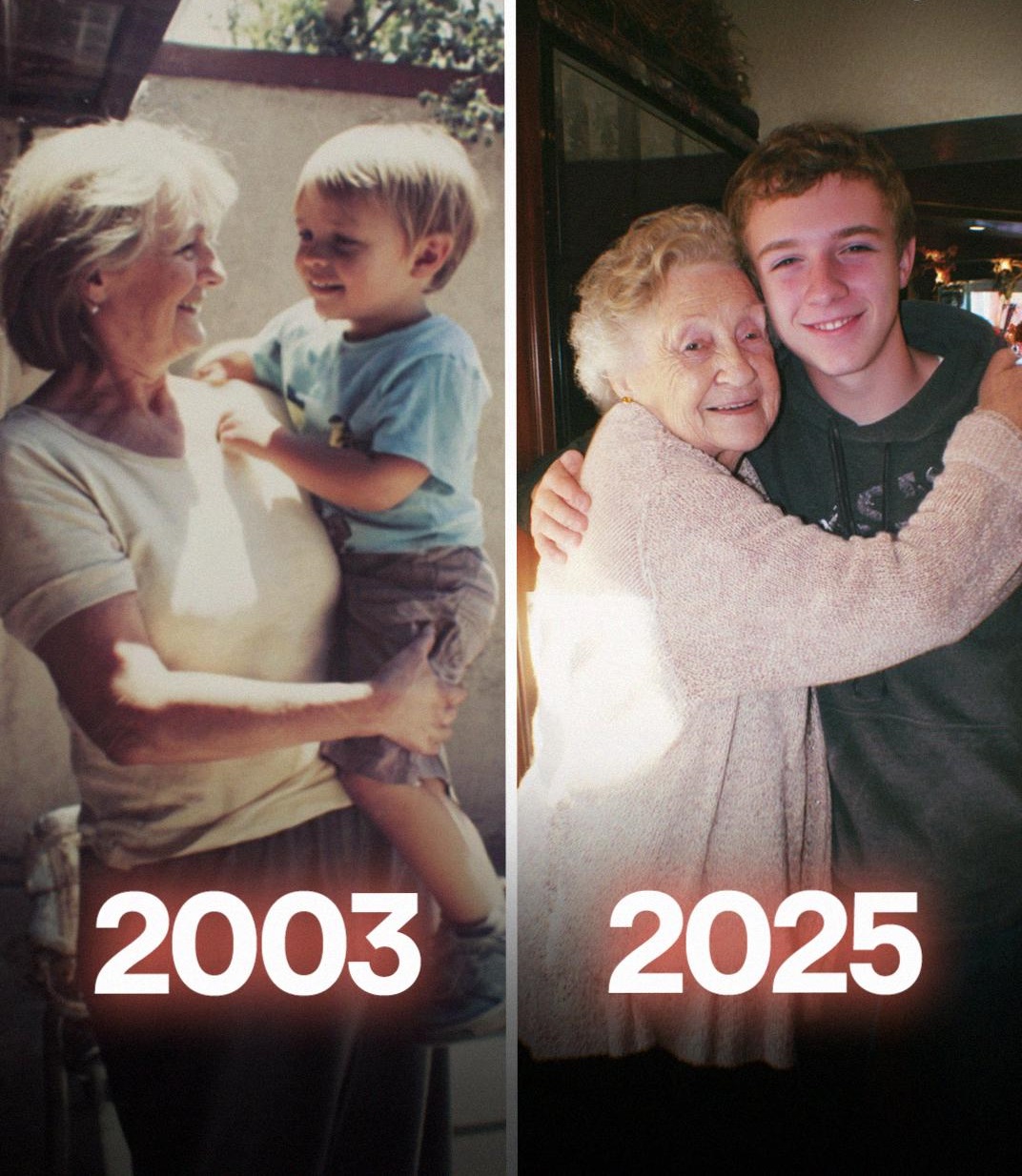
I raised my grandson after his father abandoned him, and for twenty-two years, we continued building a life of our own. I thought the past was buried, until the day his father returned with a secret plan that left us stunned.
My name is Margaret, and I never imagined my life would turn out this way.
I wasn’t always someone people would call strong. I spent most of my life working as a school librarian, the quiet, routine-loving type. Around town, I was known for baking blueberry muffins every Friday and knitting baby blankets for every new baby at church. When I lost my husband to cancer at 42, my only child, Anna, became the reason I got out of bed each morning.
Anna was my whole world. She had her father’s smile and my stubborn streak. At 27, she had her own marketing job, a cozy home just down the street, and a little boy with soft curls and big brown eyes. Ethan. My grandson.
She used to say, “Mom, you worry too much. Ethan’s gonna be just fine.”
But nothing prepares you for how quickly life can gut you.
I was 53 when the call came about the plane crash. It had been a rainy afternoon flight, some kind of mechanical failure, and there were no survivors. One moment Anna was laughing with me on the phone about something Ethan said at preschool, and the next she was gone.
Ethan was only three.
He didn’t understand death, but he knew something had changed. He clung to me like a lifeline, his small fingers tangled in my sweater, his cheeks wet and flushed with confusion. Each night, I held him close and told him stories about his mom, reminding him how deeply she loved him.

I thought, in time, we would heal together.
But I didn’t know that another heartbreak was on its way, one I never could have imagined.
It was only a few weeks after Anna’s funeral, and I was still staying in her house. Then, one Saturday morning, there was a knock at the door.
Mark, my son-in-law, stood there with Ethan’s little suitcase at his feet. He didn’t ask to come in.
“I can’t do this, Margaret,” he said. “I’m still young. I want to live my life. You take Ethan. You’ll manage.”
I stared at him. “Mark… he’s three.”
He shrugged. “I’ve met someone. I’m moving. This isn’t the life I want.”
He turned, got into his car, and drove away.
I picked up Ethan. “It’s just you and me now, baby.”
And from that moment on, it really was.
We lived in Anna’s house, small and worn, but full of love. I worked multiple jobs—cleaning offices at night, working at a bakery on weekends. Money was tight, but Ethan never lacked warmth or care.
He grew into a thoughtful, kind boy who carried groceries, folded laundry, and always asked if I needed rest.
By 25, he was successful—far more than he let on. One day he brought me a folder and said:
“Grandma, this house is ours. I want us together again. Let me take care of you.”
We moved into his beautiful new home. Staff, spotless rooms, long windows. I had my own suite and balcony. For the first time in years, I felt safe.
The old house still technically belonged to us, though weather-beaten and neglected. Ethan wasn’t ready to let it go.
That was the house Mark returned to.
Our old neighbor, Mrs. Palmer, called.

“Margaret… Mark is here.”
Ethan calmly instructed her: “If he comes back, give him our address. He can talk to me directly.”
Two days later, Mark’s rusted car pulled up.
He looked worse—thin, worn, ragged—but the glint in his eyes wasn’t guilt.
It was greed.
“Well, well,” he said. “You’ve done quite well for yourself, son.”
A white envelope slipped from his jacket. Ethan opened it.
It was a document asking Ethan to sign over co-ownership of the old house—claiming Mark had rights because he once lived there.
“Let me take that old place off your hands,” Mark said. “Seems fair.”
Ethan’s voice was steady.
“That house is where Grandma raised me. You walked away. You don’t get to show up now and claim anything.”
Mark sneered. “You owe me. Without me, you wouldn’t exist.”
Ethan stepped closer. “And without Grandma, I wouldn’t have survived.”
He handed the envelope back.
“There’s no place for you in that house. Not in this one, and not in my life.”
We went inside and shut the door.
I felt disbelief—but relief, too.
Later in the kitchen, Ethan said, “He abandoned us, and now he thinks he has the right to claim what’s ours.”
I told him the truth: the house was bought by Anna alone. Mark never contributed a dime.
Ethan decided: “I’ll restore it. Not for him. For Mom.”
I took his hand. “Your mother would be so proud. You’re strong, decent, loyal.”
He squeezed my hand. “You gave me everything. You saved me.”
Weeks later, Mrs. Palmer called again.
“Mark came back once more… but he didn’t stop. Just looked at the house and drove off.”
I didn’t feel anger. Just pity.
He had run from responsibility his whole life, and returned to find nothing waiting for him.
Ethan and I visited the old house together soon after. It was tired, but full of memories. We walked through it, planning repairs.
That night, sitting together in the sunroom, I felt something return to me that I hadn’t felt in years.
Peace.
Mark may have been Ethan’s father by blood, but he was never truly family.
Family isn’t defined by who leaves.
It’s defined by who stays.
And in the end, it was Ethan and me, just as it had been from the beginning.
