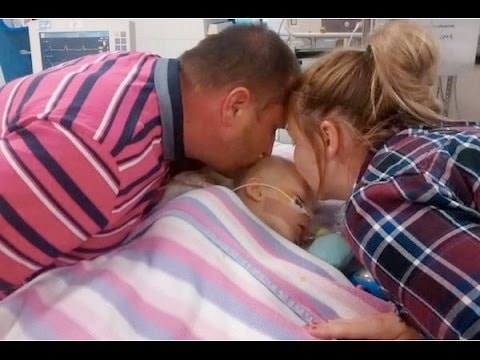
Few experiences test a family’s strength like a serious medical crisis involving a child. For parents, there is no greater fear than watching their baby struggle for life while medical teams work tirelessly in the background. For Lisa Hough and her husband, that fear became a daily reality when their infant son, Karson, was admitted to intensive care in critical condition.
Doctors delivered heartbreaking news: despite every available medical intervention, their baby’s condition was not improving. The prognosis was grim. They were told that once life-sustaining support was removed, their son would likely survive only a few minutes.
What happened next, however, became a deeply moving chapter in their family’s story—one that highlights both the limits of medical prediction and the enduring strength of parental love.
A Medical Crisis No Parent Expects
Karson’s journey began with complications that required immediate and intensive medical attention. From the moment he was admitted to the neonatal intensive care unit (NICU), his life depended on advanced life-support equipment.
A ventilator assisted his breathing, and a team of specialists monitored every vital sign around the clock. Machines, monitors, and medical tubing surrounded his tiny body. The environment was clinical and precise, yet emotionally overwhelming.
For Lisa and her husband, each day in the hospital blended hope with uncertainty. They held onto every small sign of stability while preparing themselves for difficult possibilities. Medical staff worked diligently, adjusting treatments and monitoring responses. Yet despite these efforts, improvement remained limited.
Facing an Unimaginable Decision
Eventually, doctors explained that further medical interventions were unlikely to change the outcome. The medical team approached the conversation with compassion and professionalism, outlining the situation clearly while acknowledging its emotional weight.
They informed the parents that if life support were withdrawn, Karson would probably not survive long without assistance. Based on clinical assessments, they estimated he might live only minutes after removal from the ventilator.
For any parent, such a conversation is devastating. Decisions involving life-sustaining treatment are among the most difficult families ever face. They require balancing hope, medical reality, and the desire to minimize suffering.
Lisa later shared that while they were not emotionally prepared to say goodbye, they had begun to accept the medical guidance provided to them. They understood the gravity of the situation, even if their hearts resisted it.
The Final Moments of Preparation
The hospital staff provided the Hough family with time to gather loved ones and prepare for what they believed would be their son’s final moments. These are sacred moments in a hospital setting—quiet, private, and deeply emotional.
Parents often choose to hold their child during this time, speaking softly, offering comfort, and creating a space filled with love. Medical professionals remain nearby but allow families the dignity and privacy they deserve.
Lisa described being told to expect that once the ventilator was removed, their baby would not breathe independently and that his heart would likely stop shortly thereafter. The estimate was clear: they might have only a few minutes.
The family braced themselves for the unimaginable.
An Unexpected Turn
When the ventilator was removed, everyone in the room waited quietly. Medical staff observed carefully, prepared to provide comfort care.
But something surprising happened.
Instead of the immediate decline doctors had predicted, Karson continued to breathe on his own. His heart continued to beat. Minutes passed—then more. What was expected to be a brief goodbye extended beyond initial estimates.
In situations like these, medical teams remain cautious. Prognoses are based on data and experience, but the human body can sometimes respond unpredictably. Each case is unique, and while predictions guide decision-making, they are not guarantees.
For Lisa and her husband, those additional moments felt extraordinary. What they had prepared to be final seconds stretched into precious time they had not expected.
Understanding Medical Uncertainty
It is important to recognize that doctors provide prognoses based on the best available evidence and clinical judgment. In critical care environments, decisions must often be made under conditions of uncertainty.
Infants, in particular, can present complex medical responses. While some cases follow expected trajectories, others defy initial projections. Medicine continues to evolve, but it does not always offer absolute certainty.
Healthcare providers approach these situations with compassion, striving to balance realism with empathy. Their goal is to guide families through difficult decisions while honoring the dignity and comfort of the patient.
Karson’s case became an example of how unpredictable critical care outcomes can sometimes be.
The Emotional Impact on Families
Experiences like this leave lasting impressions. The emotional rollercoaster—moving from anticipatory grief to unexpected continuation—can be overwhelming.
For parents, the moments spent holding their child, regardless of outcome, are deeply meaningful. Whether minutes or hours, that time allows for connection, love, and closure.
Lisa later reflected on how those moments changed her perspective. Instead of focusing solely on fear, she embraced gratitude for every breath her son took independently. Even in uncertainty, hope found a place.
A Story Shared to Inspire
Lisa chose to share her family’s experience publicly in order to offer encouragement to others navigating similar challenges. Stories of resilience often resonate deeply with families facing medical uncertainty.
While every situation is different and outcomes vary, hearing about unexpected strength can provide emotional comfort. It reminds others that even in the most serious circumstances, moments of grace are possible.
Her message was not one of defiance toward medical professionals, but rather one of acknowledgment: medicine guides us, but life can still surprise us.
The Strength of Parental Love
At the heart of this story lies something universal—the unwavering love parents have for their children.
In hospital rooms across the world, families sit beside bedsides, holding hands and whispering encouragement. Love does not depend on prognosis. It persists through uncertainty.
For Lisa and her husband, the experience reinforced how powerful those bonds are. Even when faced with clinical realities, their connection to their child remained the strongest force in the room.
Medical technology can sustain life, but it is human connection that sustains the spirit.
Lessons in Resilience
While not every medical crisis ends with unexpected turns, stories like this highlight several meaningful lessons:
1. Treasure Every Moment
Time is never guaranteed. Even brief moments can hold immense meaning.
2. Seek Clear Communication
Open, compassionate dialogue with healthcare providers helps families navigate difficult decisions with understanding.
3. Accept Uncertainty
Medicine provides guidance, but it cannot eliminate unpredictability.
4. Lean on Support Systems
Family, friends, and medical staff form essential networks during crises.
5. Share Stories Thoughtfully
Personal experiences can encourage others while respecting the complexities of medical care.
The Broader Conversation About Critical Care
Situations involving life support raise important ethical and emotional considerations. Hospitals typically involve multidisciplinary teams—including physicians, nurses, and counselors—to support families.
These conversations focus on the child’s comfort, quality of life, and medical realities. They are never taken lightly. Parents are encouraged to ask questions, seek second opinions if needed, and ensure they fully understand their options.
The goal is always compassionate care guided by both science and empathy.
A Reminder of Hope
While the outcome of every critical care case differs, the Hough family’s experience serves as a reminder that hope and uncertainty often coexist.
Their story does not dismiss medical expertise. Instead, it illustrates that human biology can occasionally respond in unexpected ways.
For families facing similar situations, it reinforces the importance of:
Staying informed
Asking questions
Prioritizing comfort and dignity
Holding onto meaningful moments
Hope does not guarantee a specific outcome, but it can provide emotional strength.
Conclusion
When doctors prepared Lisa Hough and her husband for what they believed would be their infant son’s final minutes, they relied on clinical assessment and professional experience. The family braced for heartbreak.
Yet in those moments, something unexpected occurred. Their child continued breathing beyond initial predictions, granting them additional time—time filled with connection, gratitude, and awe.
This story is not about defying medicine or ignoring professional guidance. It is about acknowledging that even within the boundaries of science, life can sometimes surprise us.
For families navigating medical crises, the message is simple: cherish each moment, communicate openly with healthcare providers, and lean into the strength of love and support.
In hospital rooms where uncertainty lingers, compassion remains constant. And sometimes, even in the most difficult circumstances, hope quietly endures.
