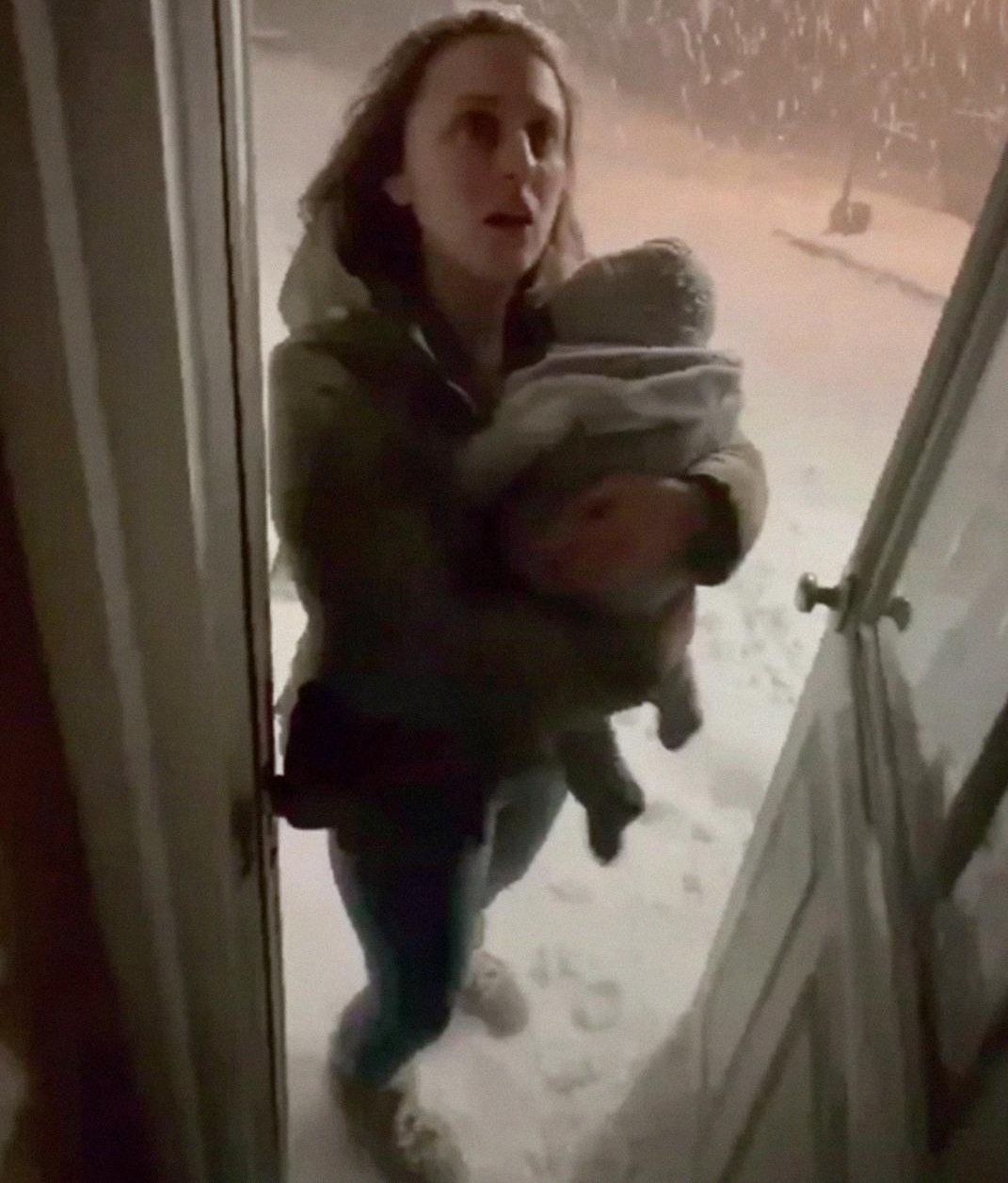
I thought it was just another bitter Wisconsin night — until a frantic knock at my door changed everything. What started as a simple act of kindness became the most unexpected chapter of my quiet life.
I’m 65, and I live alone in a small town in northern Wisconsin. We’ve got about three diners, one grocery store, and winters that could humble a buffalo. It was during one of those winter nights that a stranger came knocking on my door, only to change my life in the best way.
The cold we get here is the kind that makes you grateful for every working heater. It seeps into your bones and reminds you who’s really in charge around here. I’ve lived here my whole life.
My husband, Daniel, passed away three years ago from a heart attack in the garage while trying to fix the snowblower. One minute he was cursing about a clogged carburetor, and the next, he was gone. We had been married for 41 years.
Our kids are grown now. Michael’s in Denver working in tech, and Rebecca’s in Florida teaching elementary school. They check in when they can, but mostly it’s just me, the quiet, and the squeaky old heater that I keep kicking to stay alive.
That night was one of the worst storms we’d had that year. Snow was coming down sideways, and the wind screamed like a freight train, shaking the windows.
Around 10 p.m., I was knitting in the living room with a cup of chamomile tea when someone knocked at the door. It wasn’t a polite knock — it was frantic, panicked, loud, and fast.
Out here, nobody knocks that late unless something’s wrong. My heart jumped. I peeked through the peephole.
What I saw made me forget fear entirely.

A young woman, no more than 25, clutching a baby wrapped in a cheap fleece blanket. Her hair was matted with snow, cheeks beet red, lips trembling.
“I’m sorry,” she said the moment I opened the door. “My car broke down. I just need to warm up for a bit. Please.”
She looked scared — not just cold, but terrified in a way that made her eyes dart behind her, like someone might come dragging her away.
“I’m not dangerous,” she added quickly. “I swear.”
She told me her car had stalled half a mile down the road. Her phone was dead, and the nearest gas station was miles away.
I didn’t need convincing. One look at that baby — tiny red hands peeking out — and that was enough.
“Come in,” I said. “Let’s get that little one warmed up.”
Inside, she smelled like cold sweat, stale formula, and fear. I set her by the fireplace, gave her blankets, plugged in her phone, and handed her tea.
“What’s your name?” I asked.
“Penelope,” she said. “Everyone calls me Penny.”
“Well, Penny,” I said, “you’re safe now. I’m Maggie.”
She smiled, and it looked like it hurt — like she hadn’t done it in weeks.
She fed the baby — Ava — from a half-empty bottle and then nodded off with the little one against her chest. I let them sleep, tucked under quilts while the fire crackled.
By morning, the storm had passed. Penny called her friend Kelsey, who arrived within 40 minutes. Before she left, Penny touched my arm.
“I don’t know what would’ve happened if you hadn’t opened the door.”
“You don’t owe me anything,” I said. “Just get home safe.”
She promised to send a thank-you card. I figured I’d never hear from her again.
I was wrong.
About a month later, a white limousine pulled into my driveway. In our tiny town, the only time you see a limo is prom or a fancy funeral.
A man in a tailored suit stepped out holding a cream-colored envelope. He handed it to me politely and left without a word.

Inside was a pale blue dress wrapped in tissue paper — and a handwritten note from Penny.
She thanked me again and said she had made it home safely, Ava was thriving, and her parents were beyond grateful.
Then she wrote:
“The limousine is at your service, Mrs. Henderson. The driver will take you to the wedding and bring you home. Please come. You saved my life, and I want to make yours a little more interesting.”
I read that line five times, heart pounding. I hadn’t been anywhere in years. The idea of dressing up again felt like a door opening after a long winter.
So yes — I went.
The next morning, the limo returned. I ironed the dress, put on pearl earrings, even wore lipstick. I felt like a different woman.
The wedding was at a lakefront inn in Minnesota. Fairy lights on the porch, pine trees towering, candles glowing in the windows.
Penny met me at the entrance, radiant in satin. Ava, chubbier now and smiling, wore a tiny white dress. Penny rushed into my arms.
“You came,” she whispered, shaking.

“Of course,” I said. “I wouldn’t miss it.”
After the ceremony — intimate and beautiful beyond words — Penny’s father gave a toast thanking “the woman who opened the door that saved our daughter and granddaughter.”
People clapped. I cried.
Later, Penny led me into a small sitting room with her parents.
“You deserve to know what really happened,” she said.
She took a breath and told me the truth.
She hadn’t just been stranded that night.
She had escaped.
Driving home from visiting friends, she had been forced off the road. Two men had taken control of her car — with baby Ava still inside — intending to hold them for ransom.
They kept her and the baby in an abandoned cabin with no heat. By the third day, one of them started talking about taking Ava away.
That night, Penny pried the lock open with a hairpin, grabbed the keys, and ran. She fled into the storm.
The car died in the snow.
She saw my porch light.
The rest, she said, was because I opened the door.
Within days, the FBI found the cabin and arrested the men. Penny’s parents credited me with giving her the chance she needed to get help.
“You gave her a place to land,” her father told me. “We will never forget that.”
After the wedding, I danced a little, laughed a lot, made new friends my age, and even created a Facebook account.
When the limo brought me home that night, I hung the blue dress carefully in my closet, like something sacred.
My house didn’t feel lonely anymore.
Penny still writes. She sends pictures of Ava, now walking, curls bouncing, grin wide. I’ve become close with her mother, Claudia — we swap recipes, chat about books, even plan brunch meet-ups.
They’ve invited me for the holidays.
And every time the wind howls outside and I pour myself tea, I think about that knock on the door.
About how something so small — a knock, a quilt, a cup of tea — can change everything.
Two lives changed that night.
Hers.
And mine.
